
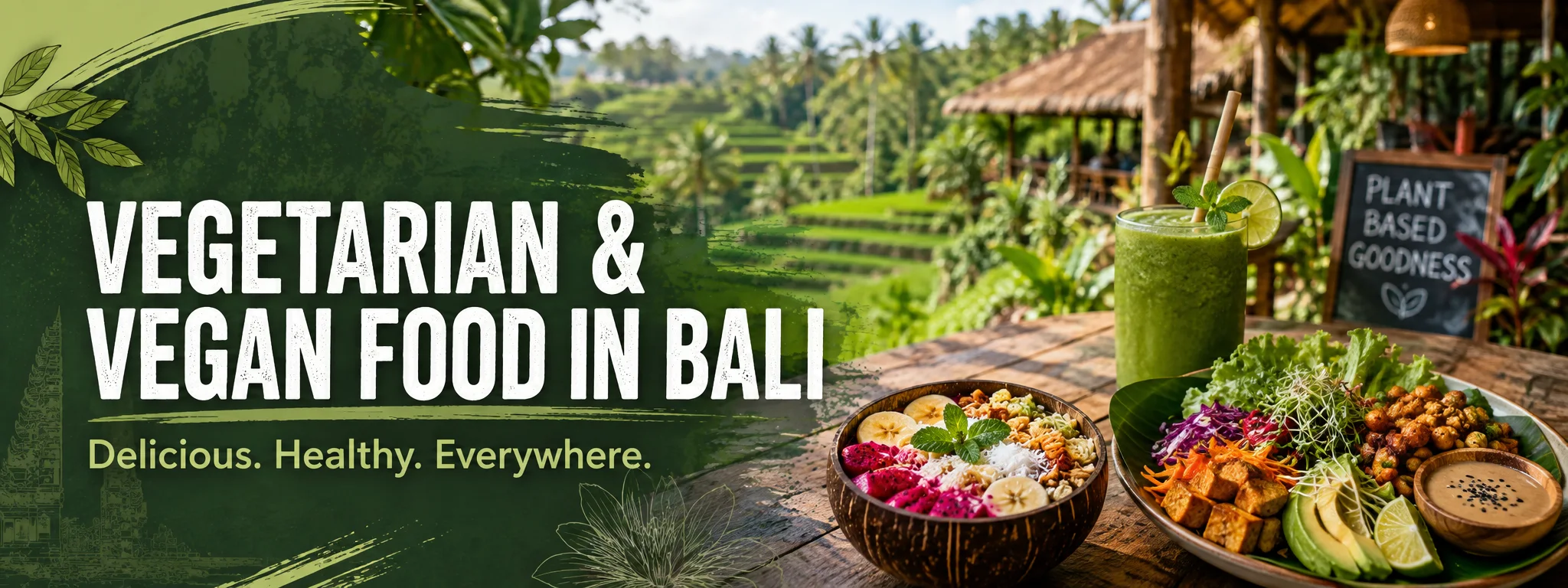
Bali is one of the easier places in Indonesia to eat vegetarian or vegan food, especially in Ubud, Canggu and the main resort areas. The catch is that “looks plant-based” and “is plant-based” are not always the same thing once shrimp paste, fish sauce, stock, egg and shared cooking enter the conversation.
I would enjoy the ridiculous depth of cafés, warungs and modern plant-based cooking without treating every meal like a laboratory inspection. Learn a few useful Indonesian phrases, ask the important questions and save the forensic work for actual allergies.
01How easy is Bali for vegetarians and vegans?
For most travellers, very easy — particularly in Ubud, Canggu, Seminyak and other tourism centres where fully vegan restaurants, vegetarian menus and clearly labelled dietary options are common. The challenge is not finding plant-based food; it is distinguishing food that looks vegetarian from food that is actually prepared without fish paste, shrimp paste, meat stock, egg or dairy.
My default assumption is that tourist-heavy Bali gives plant-based travellers plenty of choice. The further you move from those areas, the more useful simple Indonesian becomes.
Outside tourist centres, you can still eat extremely well. Tofu (tahu), tempeh, vegetables, rice, noodles, peanuts, coconut and tropical fruit are everyday Indonesian ingredients. But “vegetable dish” does not automatically mean vegetarian, and “no meat” may not be interpreted as excluding stock, dried fish or shrimp paste. A few useful Indonesian phrases make a major difference.
02Traditional dishes that can work well
Good starting points include gado-gado (vegetables with peanut sauce), pecel, vegetable urap, tofu and tempeh dishes, sayur vegetables, corn fritters, rice and many forms of nasi campur assembled from individual side dishes. The important phrase is “can work”: recipes vary by cook.
Urap, for example, is vegetables mixed with seasoned grated coconut and can be plant-based, but seasoning may differ. Gado-gado sauce may be vegan in one warung and contain ingredients you avoid in another. Tempeh is inherently plant-based, but the sauce or frying oil may not be. Ask rather than relying only on the dish name.
03Hidden animal ingredients to ask about
- Terasi: fermented shrimp paste used in many sambals and spice pastes.
- Fish sauce / dried seafood: less universal than in some Southeast Asian cuisines but still possible.
- Meat or chicken stock: can appear in soups, noodles and vegetable dishes.
- Egg: common in fried rice, noodles, martabak and some batters.
- Milk, butter or condensed milk: common in Western-style cafés, desserts and drinks.
- Shared frying oil: important if strict cross-contact avoidance matters to you.
If your diet is ethical rather than medical, decide how strict you want to be about shared equipment before the trip. If it is allergy-related, “vegan” is not enough: explain the allergen separately.
Terasi is the classic trap because a vegetable dish can still carry a tiny amount of shrimp paste. I ask once, clearly, then choose another dish if the answer is uncertain.
04Useful Indonesian ordering phrases
Saya vegetarian. — I am vegetarian.
Saya vegan. — I am vegan.
Tanpa daging. — Without meat.
Tanpa ayam dan ikan. — Without chicken and fish.
Tanpa telur. — Without egg.
Tanpa susu. — Without milk.
Tanpa terasi. — Without shrimp paste.
Apakah ada kaldu ayam atau daging? — Is there chicken or meat stock?
For strict vegan food, combine several phrases rather than assuming everyone uses “vegan” in exactly the same way. A translation card on your phone is useful in small warungs.
05Ubud: the easiest all-round base
Ubud has one of Bali’s deepest plant-based scenes because vegetarian cooking overlaps with yoga, wellness, organic-food and international café culture. You can find raw-food menus, Indonesian vegan cooking, bakery items, high-protein bowls, fermented foods and elaborate tasting menus as well as simple warung meals.
Ubud is where I would send somebody who wants plant-based choice without planning every meal. The density of vegetarian, vegan and adaptable kitchens makes life very easy.
The downside is that “wellness food” can become expensive and culturally detached from Bali. Do not spend a week eating imported superfoods while ignoring tempeh, local vegetables and traditional preparations. Mix dedicated vegan restaurants with ordinary Indonesian food where staff understand your requirements.
06Canggu, Seminyak and the south-coast café belt
Canggu and Seminyak have abundant vegan-friendly cafés, often with excellent coffee, plant milks and clearly labelled menus. Canggu is particularly strong for casual bowls, bakeries and fitness-oriented food. Seminyak offers more mixed groups: restaurants where one person can order vegan while others choose seafood or meat.
That flexibility is useful for families and groups, but confirm whether “vegan option available” means a properly designed dish or simply removing cheese from something. Dedicated plant-based venues generally understand cross-contact and ingredients better.
07Sanur, Nusa Dua and resort areas
Sanur is straightforward for vegetarians and increasingly good for vegans, especially along the main dining strips. Nusa Dua’s large hotels can usually handle dietary requests well if informed in advance, although prices are higher. Resort buffets require more care because serving utensils move between dishes and labels may be incomplete.
If staying at a hotel, email before arrival if your requirements are strict. “Vegan breakfast” may otherwise mean fruit and toast, whereas advance notice can produce proper cooked options.
08Eating plant-based outside the tourist centres
In smaller towns and villages, look for rice-and-side-dish warungs where you can point to tempeh, tofu and vegetables individually. This is often easier than ordering a mixed dish whose seasoning is hidden. Padang-style restaurants can offer vegetable and tofu choices, but coconut curries may share cooking bases with meat, so strict vegans should ask.
Fruit markets are excellent for snacks and breakfast supplies. Bananas, papaya, pineapple, mangosteen, rambutan, salak and dragon fruit are widely available seasonally. See our Bali fruit guide.
09Getting enough protein without living on smoothie bowls
Tempeh is the star. It is inexpensive, widely available and nutritionally useful, while tofu, peanuts, beans and lentils appear across Indonesian and international menus. A plate of rice, vegetables, tempeh and tofu is usually more sustaining than an expensive fruit bowl with decorative seeds.
I refuse to accept that vegan travel requires living on fruit bowls and vibes. Tempeh, tofu, beans, nuts and proper Indonesian meals can do far more useful work.
Travellers doing long hikes, surfing or gym training should pay attention to total calories as well as protein. Vegan food can be abundant in Bali but some café portions are surprisingly small. If you have nutritional requirements, choose substantial meals rather than assuming “healthy” means adequate.
10Vegan, allergy-safe and gluten-free are three different things
A vegan kitchen is not automatically safe for nut, soy, sesame or gluten allergies. In fact, plant-based restaurants often use nuts and soy heavily. Likewise, gluten-free labels do not necessarily imply separate fryers or preparation surfaces.
Vegan and allergy-safe are completely different promises. If a reaction could be serious, I care about cross-contact and kitchen understanding far more than the little leaf icon on a menu.
For severe allergies, explain the specific ingredient and contamination risk, carry medication prescribed for you and favour businesses able to answer detailed questions confidently. Our food safety guide covers broader hygiene issues.
11Vegetarian, vegan and halal are not interchangeable
Vegan food excludes animal products; halal certification addresses a broader set of Islamic dietary and production requirements. A vegan restaurant is therefore not automatically halal-certified, and a halal restaurant is not necessarily vegetarian. Travellers who require certified halal food can use Indonesia’s BPJPH certificate search to check certified businesses/products.
This distinction matters particularly where alcohol is served or where certification is important to the diner. Do not infer certification from a green logo, “no pork” sign or vegan menu.
12Groceries, villas and self-catering
Self-catering is easy in larger tourist areas. Supermarkets carry tofu, tempeh, plant milks, oats, pasta, legumes and imported vegan products, while local markets offer far better-value fruit, vegetables, herbs and spices. Villas with kitchens are useful for families or travellers with allergies.
Wash produce appropriately, keep perishables refrigerated and be realistic about kitchen equipment in budget villas. If cooking Balinese food yourself, a market visit plus a cooking class is much more informative than buying imported substitutes.
13Plant-based eating and sustainability without moral theatre
Choosing more plant-based meals can reduce reliance on some resource-intensive foods, but a vegan meal is not automatically locally sourced or low-impact. Imported berries, packaged supplements and air-freighted substitutes can have a larger footprint than simple local tempeh, vegetables and rice.
The most grounded approach is to eat seasonal produce, support local businesses, minimise unnecessary packaging and avoid wasting food. Bali does not need travellers turning diet into a performance; it benefits from thoughtful consumption.
14Our practical verdict
Vegetarians can travel Bali with almost no difficulty. Vegans also have it unusually easy in major visitor areas, provided they learn to ask about terasi, stock, egg and dairy when eating outside dedicated vegan venues. The island is at its best when you combine the sophisticated plant-based scene with humble Indonesian staples rather than treating those as separate worlds.
15What plant-based eating costs
Plant-based Bali can be extremely cheap or surprisingly expensive. A local plate of rice, vegetables, tofu and tempeh may cost a fraction of a smoothie bowl in a design-heavy café. Both can be enjoyable, but do not confuse price with nutritional quality or authenticity.
Travellers on a budget should learn the warung system: choose rice plus several visible vegetable, tofu and tempeh sides, confirm that sauces do not contain shrimp paste or meat stock, and pay according to the number/type of dishes. Dedicated vegan cafés are useful when you want certainty, baked goods, plant milk or Western-style meals, but there is no need to use them for every meal.
Imported vegan cheese, protein products and speciality supplements can cost more than in your home country. If you rely on a specific product for medical or nutritional reasons, bring a reasonable supply rather than assuming every Bali supermarket stocks it.
16Coffee, smoothies, desserts and the easy-to-miss extras
Plant milk is widely available in tourism areas, particularly oat, soy, coconut and almond, but cafés may charge extra. Indonesian-style coffee is often served black unless milk is requested. Bottled drinks and packaged snacks need label checking just as they do anywhere else.
Desserts require more attention. Traditional sweets frequently use rice flour, coconut, palm sugar and banana and may be vegan, but some contain egg or dairy. Western pastries almost always need checking. Smoothies are straightforward if made with fruit and water or plant milk, but yoghurt, honey and whey protein are common additions in fitness cafés.
If you avoid honey for vegan reasons, say so explicitly; “vegan” menus are usually reliable in dedicated venues but casual cafés may view honey differently.
17Ceremonial food and why “vegetarian Bali” is an incomplete picture
Although Bali has excellent plant-based food, meat — particularly pork and chicken — has important roles in many ceremonial and communal contexts. It would be misleading to portray Balinese culture itself as naturally vegetarian simply because tofu, tempeh and vegetables are common.
Visitors may encounter offerings or feast preparations during ceremonies. You do not need to eat food that conflicts with your beliefs, but respond politely rather than treating local ritual practice as a dietary argument. In tourist restaurants, plant-based cuisine is a choice; in ceremonies, food can carry social and religious meaning.
18Sources & related reading
Dietary/certification reference: Indonesia BPJPH halal certificate search. Traditional dish context is based on Indonesian culinary practice and Indonesia Travel material; recipes vary by kitchen, so always confirm ingredients where dietary restrictions matter.
Continue planning: Balinese cuisine · warungs · food safety · tropical fruit · cooking classes.
TATS Man bottom line: Bali can be exceptionally easy for plant-based travellers, provided you distinguish preference from allergy and ask about hidden ingredients when they matter. Eat widely, learn a few phrases and let tempeh do some heavy lifting.
Cheers, Carpe Diem & May Your Tempeh Be Crispy! 🍻⏳🥬
your tofu-finding, terasi-questioning plant-powered cyborg

About the author
TATS Man
Travel journalist · digital nomad since 2007 · visiting Bali since 1989
TATS Man is the beer-loving cyborg travel journalist behind Totally Bali and TATS (Totally Awesome Travel Sites). He has travelled and worked remotely since 2007 and has been visiting Bali since 1989. His guides combine long-term destination familiarity with current primary-source research — and he does not claim first-hand experience where he does not have it.