
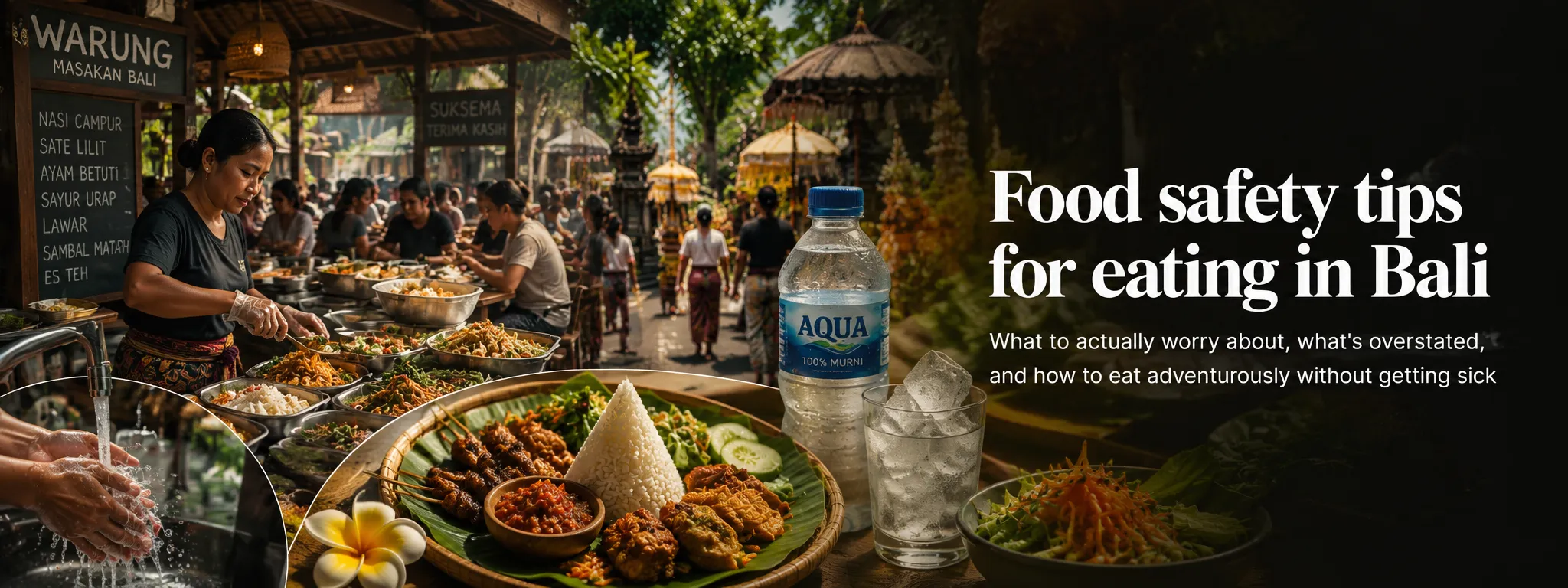
01 Water — the one non-negotiable
Tap water in Bali is genuinely not safe to drink — this is the one food safety rule worth treating as absolute rather than a spectrum. Bottled water (Aqua is the most reliable brand) or a filtered bottle throughout your stay, including for brushing teeth if you want to be cautious. See our packing list for reusable filter bottle recommendations that reduce both cost and plastic waste.
02 Ice — mostly fine now
Ice used to be a genuine concern in Bali, but the vast majority of ice at established restaurants, cafés and reputable warungs is now commercially produced from filtered water — a real change from decades past. At very basic roadside stalls it's worth being slightly more cautious, but this is a much smaller concern than it once was and not worth avoiding ice entirely at normal tourist-area establishments.
03 Warung food — safer than the reputation suggests
Street and warung food safety worries are genuinely overstated for most visitors eating at busy, reputable local establishments — see our warungs guide for how to identify a good one. High turnover, fresh cooking, and local customer volume are all positive safety signals, not just quality signals. The genuine risk is food that's been sitting out for extended periods without turnover, which applies at any establishment, tourist or local.
04 What's actually worth being cautious about
Raw or undercooked seafood from questionable sources, food that's clearly been sitting unrefrigerated for hours in the heat, and unlabelled homemade arak (see our drinks guide for the specific methanol safety concern there) are the genuine categories of risk worth actively avoiding, rather than a blanket avoidance of local food generally.
05 If you do get an upset stomach
Mild stomach upset is common enough among travellers to any new food environment that it shouldn't be treated as a sign of doing something wrong — hydrate consistently, rest, and use oral rehydration sachets if needed. Most cases resolve within a day or two without needing medical attention. If symptoms are severe, persistent beyond 48 hours, or accompanied by high fever, see our safety and health guide for when to seek proper medical care.