

Bali will sell you adrenaline from a polished resort desk, a slick booking site or a roadside sign with three exclamation marks. I care much less about how “extreme” the marketing sounds than who actually operates the activity, what condition the equipment is in and whether the weather plan makes sense.
I have not personally tested every raft, ATV, swing or zip line on the island, and I am not going to pretend I have. Current operator details and restrictions need checking at booking time; the aim here is to help you ask the questions that separate a good adventure day from an avoidable mess.
01 Bali's adventure scene is broad — and inconsistent
I treat Bali’s adventure market as wildly uneven. It runs from professionally organised rafting and dive operations to tiny roadside sellers reselling somebody else’s ATV or swing ticket, so the brand on your voucher may not be the company actually maintaining the equipment or running the activity.
My booking order is activity first, operator second, price third. Find out where it happens, who physically runs it and what is included before comparing the cheap deal with the expensive one.
02 White-water rafting: Ayung and beyond
The Ayung River near Ubud is Bali's best-known rafting corridor and is generally sold as an accessible introduction rather than expedition-level white water. Conditions change with rainfall, however, so a fixed river grade printed in a brochure should never replace the operator's assessment on the day.
A good rafting operator provides helmets and flotation devices, a proper safety briefing, trained guides, transport logistics and a clear plan for high water or severe weather. Remember that the physical part often includes long staircases to and from the river as well as the rafting itself.
03 ATV and quad-bike tours
ATV products vary more than their advertisements suggest. Some routes are mostly purpose-built mud tracks; others include rice-field edges, village roads, tunnels, rivers or short public-road transfers. Ask what percentage is off-road and whether you ride solo or tandem.
Helmet quality, vehicle condition and guide spacing matter. Beginners should get enough practice time before entering technical terrain. If the briefing consists of “accelerator here, brake there, follow me” and immediately leaves for traffic, that is not a confidence-builder.
04 Cycling and e-bike adventures
Guided cycling is a better way to experience Bali than casually renting a bike in dense South Bali traffic. Highland-to-village downhill routes and quieter Ubud-area rides can be excellent, while serious riders can seek road, gravel and climbing days.
Our dedicated Bali cycling guide explains route choice, e-bikes, traffic and bike checks. Treat a helmet and functioning brakes as essentials, not optional tour accessories.
05 Giant swings, flying fox and aerial rides
Some Bali swings exist mainly to create a photograph; others use greater height and speed as the attraction. Decide which you are buying. Current venues such as Alas Harum publish height/weight limits for specific swings, flying fox and sky-bike products, which is the kind of concrete information you should look for before booking.
I never assume the word “extreme” means anything technical. It is marketing unless the venue backs it up with clear restrictions, equipment standards and operating procedures, so read those terms yourself instead of treating the product name as a safety rating.
06 Bungee: verify the current operation, not the legend
The famous AJ Hackett/Double Six bungee tower in Seminyak is long closed, despite old pages still listing it. A Nusa Penida operation has also faced closure by local authorities. That makes bungee the clearest example of why dated Bali adventure information matters.
See our current bungee and extreme-activities guide before making a special trip.
07 Surfing, diving and water-based adventure
Surfing and diving can range from beginner-friendly lessons to genuinely high-consequence conditions. A first surf lesson on a suitable beach is not comparable to Padang Padang reef in serious swell; a shallow introductory dive is not the same as current-heavy advanced sites.
Choose training and location for your experience level. Our surf guide and diving and snorkelling guide go into those differences.
08 The operator checklist
Before paying, ask who actually operates the activity, what insurance is included, age/weight/health limits, guide qualifications or experience, equipment standards, group size, transport, lockers, meal inclusions, weather cancellation and refund terms. If a reseller cannot identify the operator, that is useful information.
For families, older travellers or anyone with an injury, disclose limitations before booking. “Suitable for everyone” is marketing, not a medical or safety assessment.
09 Weather changes the product
Heavy rain can change river levels, trail grip, visibility and road access. Strong wind can stop aerial activities. High surf changes what is appropriate for beginners. A reputable operator should be willing to delay or cancel when conditions move outside its limits.
Do not pressure staff to operate because it is your final holiday day. A weather cancellation is annoying; a bad safety decision is worse.
10 Build one good adventure day, not five mediocre ones
Choose one major activity, allow for transport and recovery, and give it enough time. Rafting plus a relaxed Ubud afternoon is usually more enjoyable than rafting, ATV, swing, waterfall and sunset all squeezed into a single reseller package.
Bali rewards curiosity, but the best adventure itinerary still needs boring things: realistic travel times, decent equipment, clear insurance and an operator you can identify.
11 Match the activity to your real ability
Holiday confidence is not the same as technical experience. A fit runner may still be a nervous swimmer; an experienced motorcyclist may never have handled an ATV on mud; a capable cyclist may find Bali traffic more stressful than the climb. Tell the operator what you have actually done before and ask which route they would use for a cautious beginner.
Check minimum ages, height and weight limits before involving children. Pregnancy, recent surgery, heart conditions, back or neck injuries and some medications can rule out particular activities. A trustworthy operator will treat those questions seriously rather than wave everybody through.
12 Questions to ask before you pay
Get the operator's name, exact location, activity duration, transfer time, equipment supplied, guide-to-guest ratio and cancellation terms in writing. Ask whether the price includes photographs, lockers, showers, meals, taxes and hotel transfers. Cheap packages often become less cheap once the practical extras appear.
For anything involving water, heights or vehicles, I want to know who makes the weather decision and what happens if conditions deteriorate. Keep the booking confirmation and emergency contact offline on your phone; “we will see when we get there” is not enough for the important bits.
13 A realistic adventure-day plan
Leave early, eat a light breakfast, carry water and avoid scheduling a fixed airport transfer or expensive dinner immediately afterwards. Bali road delays can turn a nominal half-day activity into most of the day. Bring dry clothes, secure footwear and a waterproof pouch, but leave jewellery and unnecessary valuables at the hotel.
Afterwards, give yourself time to shower, rehydrate and recover. I would take one well-run experience with breathing room over racing between four unrelated attractions simply because a reseller managed to fit them into one heroic-looking package.
Cheers, Carpe Diem & Come Home With a Story, Not an Insurance Claim! 🍻⏳🧗
your safety-first adrenaline correspondent
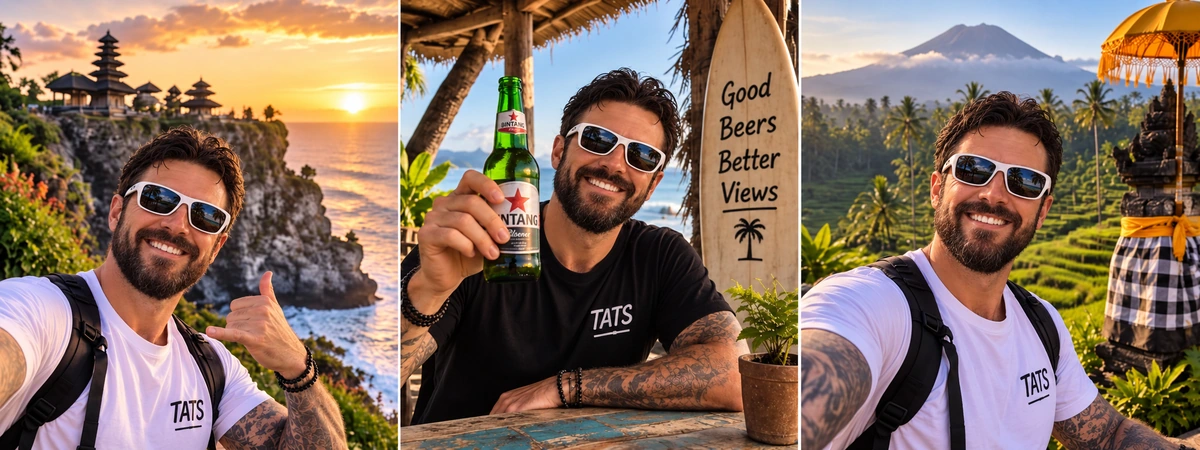
About the author
TATS Man
Travel journalist · digital nomad since 2007 · visiting Bali since 1989
TATS Man is the beer-loving cyborg travel journalist behind Totally Bali and TATS (Totally Awesome Travel Sites). He has travelled and worked remotely since 2007 and has been visiting Bali since 1989. His guides combine long-term destination familiarity with current primary-source research — and he does not claim first-hand experience where he does not have it.