
01 What Alila Villas Uluwatu is really like
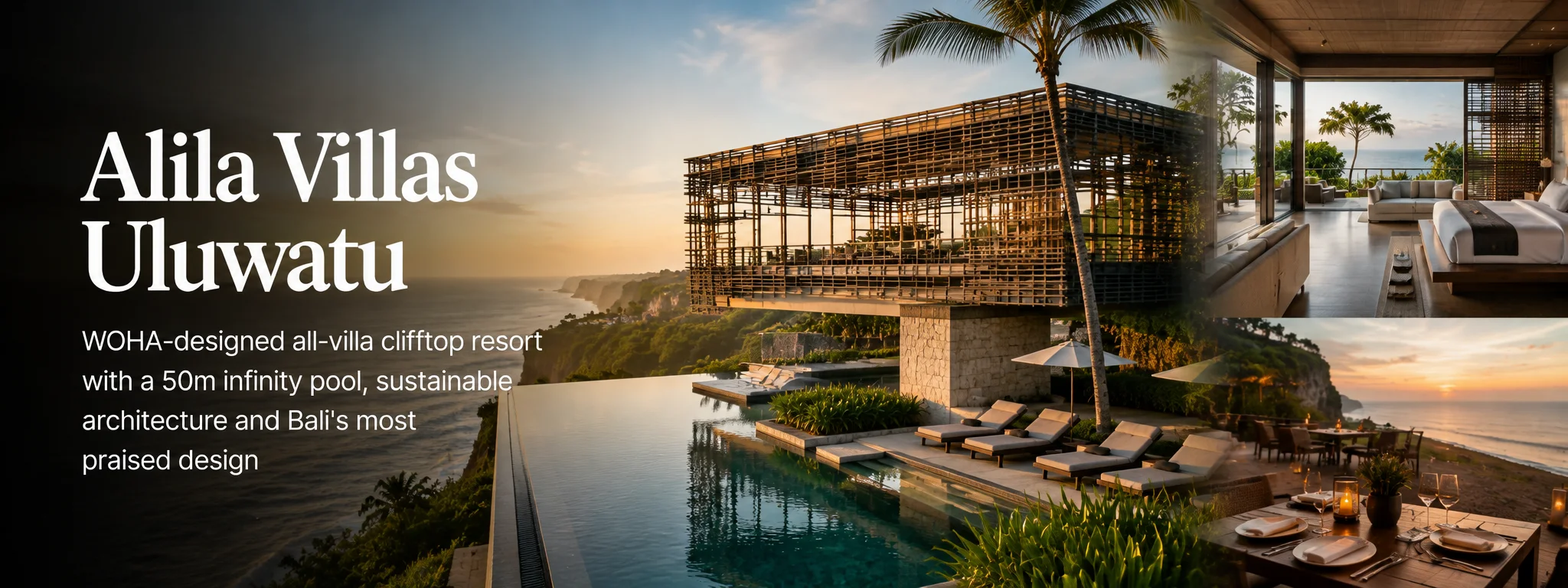
Alila Villas Uluwatu is a destination resort rather than a hotel you use simply as a bed between sightseeing days. The architecture is the first thing most people notice: low stone walls, broad horizontal lines, open pavilions and huge amounts of private outdoor space sit above Bali’s southern cliffs. The visual drama is real, but the more important practical point is how the design changes the stay. You spend a lot of time inside the resort, moving between your villa, the pool, restaurants, spa and cliff-edge viewpoints. That works beautifully for travellers who want privacy and a slow rhythm. If your plan is to be out exploring Seminyak, Canggu or central Bali every day, you are paying for a resort experience you may barely use.
02 The villas: space and privacy are the point
Every accommodation category is built around private outdoor living rather than a conventional hotel-room layout. Hyatt currently lists pool-villa categories ranging from one-bedroom villas through larger multi-bedroom hillside and cliff-edge options, with private pools across the range. Even the one-bedroom category combines a substantial indoor area with a much larger private terrace, cabana and pool zone. That means the entry-level experience already feels more like a small private compound than a room. Higher categories buy you more space, more dramatic ocean positioning and, for groups, separate bedrooms and living zones. Before paying a large premium for a cliff-edge category, decide whether uninterrupted ocean views matter more to you than simply having the resort’s excellent public cliff views a short walk away.
03 The 50-metre pool is more than an Instagram prop
The main 50-metre pool sits on the cliff edge facing the Indian Ocean and remains the resort’s defining shared space. It photographs brilliantly, but it also works as an actual swimming pool rather than a decorative strip of water. The trade-off is that it can feel much more exposed and social than your private villa pool, especially around the middle of the day. If you want laps or a quieter swim, use the main pool early and retreat to your villa later. The resort’s clifftop setting also means wind, cloud and salt air can change the mood quickly; sunset is not guaranteed to be a blazing postcard every evening. The view is the attraction, not a promise of perfect weather.
04 Dining is better understood as a resort circuit
The current dining line-up is broader than the old page suggested. CIRE handles all-day international and coastal cooking with wide ocean views, while The Warung focuses on Indonesian and Balinese flavours in a more relaxed setting. Sunset Cabana Bar is the obvious cliff-edge drink stop, and Batique adds a cocktail-focused venue built around Indonesian ingredients and craft references. For a two- or three-night stay, that variety is enough to keep most guests happily on-property. For a longer stay, build in at least one meal outside the resort in Uluwatu or Pecatu. The Bukit now has enough good independent restaurants that leaving the hotel for dinner can add variety without turning the night into a major expedition.
05 Spa, yoga and fitness
Spa Alila offers treatment rooms plus a cliff-edge spa cabana, while daily yoga and a 24-hour fitness centre give the resort more depth than pool-and-cocktail luxury. These facilities are particularly useful because the property encourages guests to stay put. Treatments should be booked ahead if they are a priority rather than assumed available at your preferred sunset or late-afternoon slot. The cliff-edge spa setting is impressive, but remember that outdoor or semi-outdoor experiences can be affected by wind and weather. Yoga is a good low-effort way to use the landscape without committing half a day. None of these extras are a substitute for choosing the right location, but they make a quiet resort-focused stay feel much less repetitive.
06 Uluwatu location: brilliant for the Bukit, awkward for everything else
The resort is in the Pecatu/Uluwatu part of the Bukit Peninsula, which is ideal for Uluwatu Temple, cliff beaches, surf breaks and the southern peninsula’s restaurant scene. It is not a sensible base for repeatedly crossing the island to Ubud, Canggu or the north. Bali road times vary too much for honest guides to promise fixed transfer minutes, so plan by area rather than kilometres. If most of your wish list is on the Bukit, Alila is well positioned. If half your itinerary is in central Bali, split the stay instead of spending hours in traffic. A private driver or arranged car is the practical default for sightseeing because there is no useful walkable town centre immediately outside the gates.
07 Clifftop does not mean walk-out beach resort
This is an important expectation check: Alila’s drama comes from being high above the ocean, not from opening directly onto a broad swimming beach. Travellers imagining easy barefoot walks from breakfast to calm sand should choose a beachfront property elsewhere. Uluwatu’s beaches are scattered around the peninsula and many involve stairs, steep access roads, reef, tides or surf conditions. They are excellent to explore, but they are destinations in their own right. If beach access is central to your holiday, combine Alila with a few nights in Jimbaran, Sanur or Nusa Dua. If you mainly want ocean views, privacy and a striking cliff setting, the lack of direct beach frontage is far less important.
08 Mobility and accessibility reality
The resort officially lists accessible routes to key public areas including reception, restaurants, the spa, swimming pool and fitness facilities, and it offers accessible guest-room features. That is useful information, but the overall site is still a large clifftop resort with changes in level and long distances between some zones. Travellers with limited mobility should contact the hotel before booking and ask about the exact villa category, route to dining, buggy or vehicle assistance, bathroom layout and whether any desired cliff-edge venue requires steps. Do not assume that a property being technically accessible means every scenic corner is equally easy to reach. A carefully chosen villa location can make a major difference to the comfort of the stay.
09 Who should book it — and who probably should not
Book Alila Villas Uluwatu if private space, architecture, ocean views and staying mostly within one polished resort sound like the holiday. It is especially strong for couples, special occasions and travellers who value a villa that feels genuinely private. Larger villas can also work for families or groups who want to spend time together rather than scatter across a conventional hotel. Think twice if you want nightlife on your doorstep, a walkable neighbourhood, direct sandy-beach access or a different Bali district every day. None of those are flaws; they are simply mismatches. The expensive mistake is choosing a famous hotel first and only later realising its geography fights the trip you wanted.
10 How to book it intelligently
Compare the hotel’s own rate with reputable booking channels, but compare inclusions rather than the headline number alone. Breakfast, transfers, resort credits, cancellation terms and villa category can materially change value. Check the exact view description: “Uluwatu”, “hillside” and “cliff edge” categories are not interchangeable. If you are travelling with children or anyone with mobility needs, confirm bedding, pool safety, villa position and transport within the resort before paying. For a first stay, two to four nights is usually enough to enjoy the property without feeling stranded from the rest of Bali. Pairing it with Ubud or another coastal area creates a much better island trip than trying to make one clifftop resort serve every purpose.