
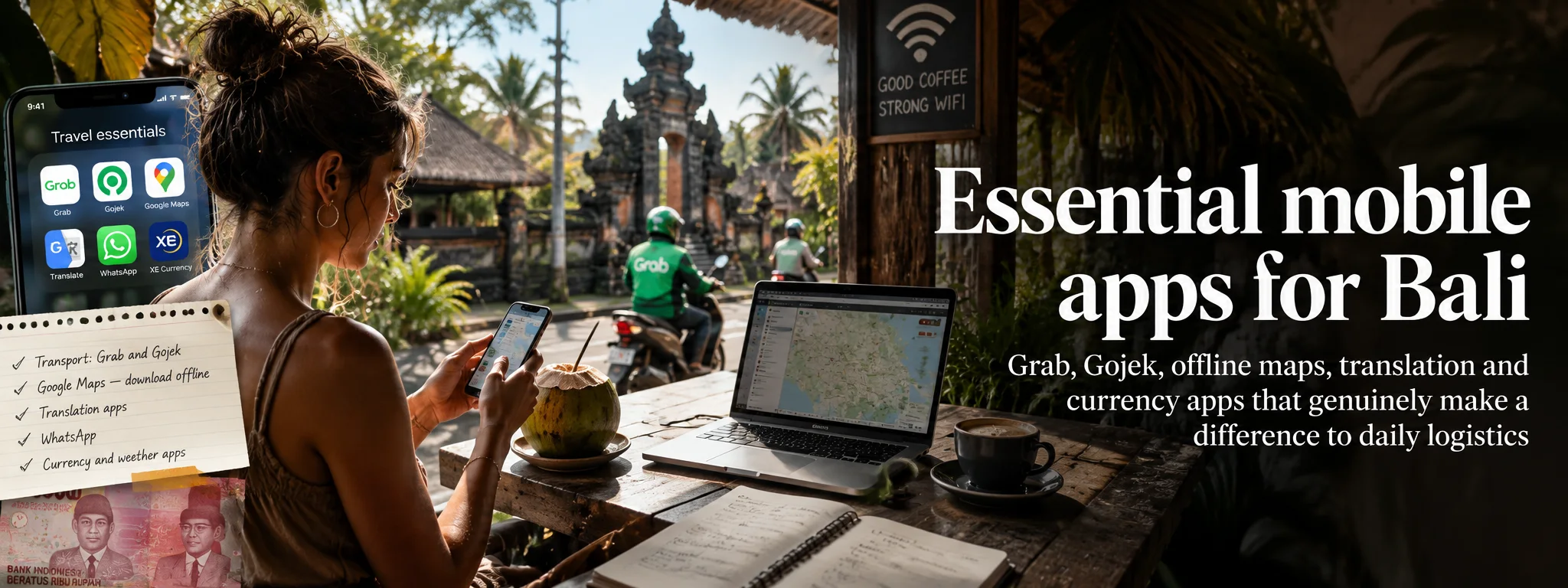
01 Transport: Grab and Gojek
Grab and Gojek are essential for getting around South Bali and Ubud — see our full getting around guide for how they work and their limitations. Install both before arrival and set up payment (card or local e-wallet top-up) so you're ready to use them from your first day rather than figuring it out on arrival.
02 Google Maps — download offline
Google Maps works well across Bali's main tourist areas, but mobile coverage can be patchy in more remote parts of East Bali, the highlands, and particularly Nusa Penida. Download the relevant offline map areas before day trips to these regions — a simple step that avoids genuine navigation problems if you lose signal.
03 Translation apps
Google Translate, with the Indonesian language pack downloaded for offline use, is genuinely useful beyond the main tourist areas where English is less commonly spoken — warungs, local markets, and more remote regions. The camera translation feature (pointing your phone at text) works reasonably well for menus and signage.
04 WhatsApp
WhatsApp functions as the primary communication channel for a huge amount of Bali's tourism economy — private drivers, tour operators, villa managers and even some restaurants for bookings often prefer WhatsApp contact over phone calls or email. Having it installed and your number set up before arrival streamlines a genuinely large amount of practical trip logistics.
05 Currency and weather apps
A simple currency conversion app removes the mental math friction of constantly converting rupiah figures — useful given how many zeros are involved in everyday transactions (see our currency guide). A standard weather app is worth checking regularly given Bali's variable wet-season rain patterns, particularly for planning outdoor activities and day trips.