
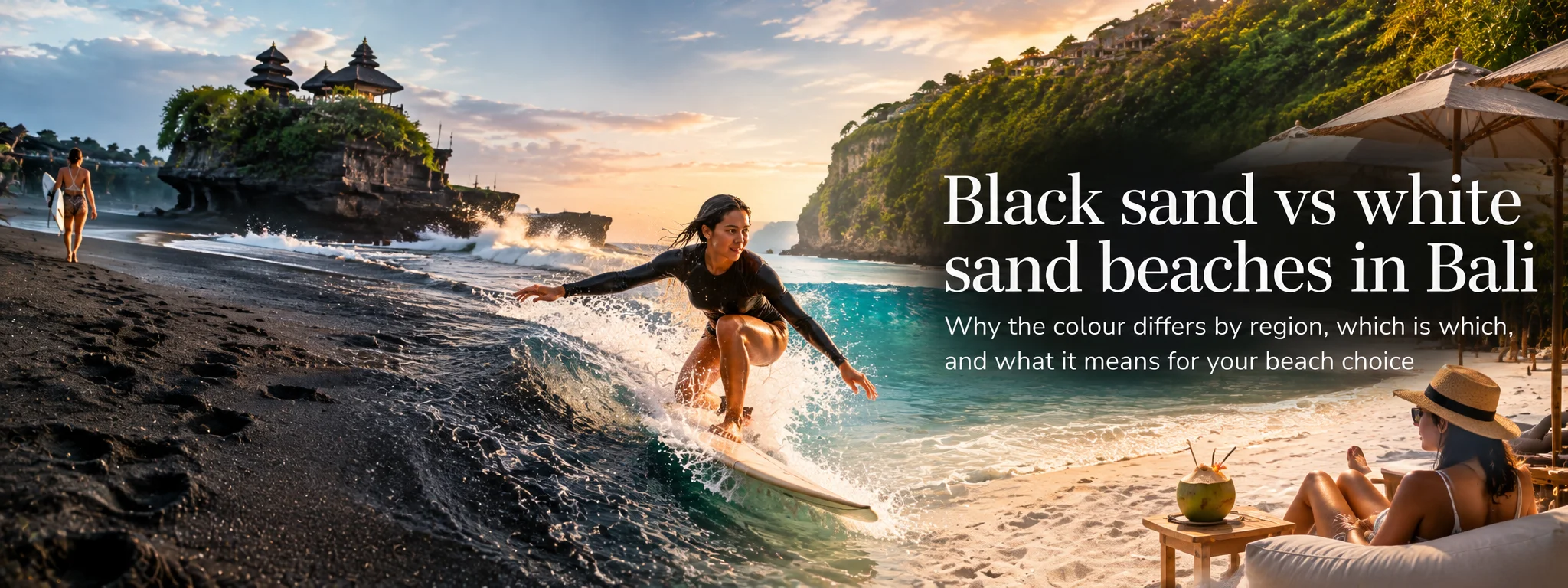
01 Why Bali has such different sand colours
Bali is a volcanic island sitting beside limestone country, river systems, reefs and constantly moving coastal sediment. That combination produces beaches that can look jet black, charcoal grey, brown, gold, cream or almost white within a relatively small island.
Dark sand is usually linked to volcanic material eroded and carried toward the coast. Paler beaches, especially around the Bukit Peninsula, are more strongly influenced by limestone and reef-derived material. The result is not a neat north-versus-south map, so treating Bali as having just “black beaches” and “white beaches” misses half the coastline.
02 Where the black and grey sand is strongest
North Bali is the easiest place to see long stretches of dark volcanic sand. Official Indonesian tourism material describes Lovina as grey and black volcanic sand, and similar tones appear along parts of the Buleleng coast. West Bali and stretches north of Canggu also have dark beaches shaped by volcanic sediment.
These beaches can look almost silver at sunrise and richly black when wet. They often feel less like the postcard image of tropical Bali, which is precisely why many travellers like them. The visual character is moodier, broader and more distinctly volcanic.
03 Where the pale beaches are
The Bukit Peninsula has many of Bali’s best-known pale or golden beaches: Uluwatu-area coves, Balangan, Bingin, Padang Padang and the Nusa Dua side all lean much lighter than the volcanic coasts. The exact shade changes with tide, reef material, weather and how wet the sand is.
Pale sand does not automatically mean an easy swimming beach. Some beautiful Bukit beaches sit below cliffs, have strong surf or expose reef at low tide. For a practical comparison, our Uluwatu beaches guide focuses on access and conditions rather than colour.
04 East Bali breaks the simple black-or-white rule
East Bali is a good reminder that coastlines refuse to obey tourist categories. Around Amed you can find dark sand, pebbles and coarse volcanic material, while farther east and south-east there are lighter pockets and reef beaches. River mouths can change the colour and texture again.
If your goal is snorkelling or diving, sand colour is often irrelevant. Reef condition, wind, boat traffic, visibility and entry points matter far more. A modest-looking dark beach can have better underwater access than a bright postcard beach.
05 Sand colour does not predict water clarity
Clear turquoise water is a product of weather, depth, sediment, reef, wind and wave conditions — not simply pale sand. Dark sand can sit beside remarkably clear water, while a white beach can turn cloudy after heavy swell or rain.
This is especially important in wet weather. Runoff can affect visibility near river mouths regardless of the colour of the beach. If swimming or snorkelling quality matters, check the day’s conditions rather than choosing from Instagram photographs taken in a different season.
Season also changes the look of the same beach. Stronger swell can move sand, expose stones or reef and reshape the shoreline for weeks at a time. A beach that looked broad and pale in a dry-season photograph may be narrower, darker or covered with natural debris after storms. That is normal coastal change, not necessarily evidence that you have gone to the wrong place.
06 Sand colour tells you almost nothing about swimming safety
A calm-looking black beach is not automatically safer than a white one, and a famous white beach is not automatically suitable for casual swimming. Swell direction, reef shelves, rips, tides and seasonal wind are the real variables.
Use lifeguarded areas when available, follow flags and local warnings, and be conservative if you do not know the beach. Bali’s surf culture means some of the island’s most beautiful beaches are famous precisely because powerful waves reach them.
07 Dark sand can get brutally hot
One difference you will genuinely feel is heat. Dark volcanic sand absorbs sunlight efficiently and can become painfully hot under bare feet around midday. Footwear matters more on these beaches than many first-time visitors expect.
Pale sand can also become hot, of course, but the contrast is often noticeable. On dark-sand beaches, morning and late afternoon are especially comfortable — and usually better for photography anyway.
08 The colours photograph differently
Black sand creates strong contrast with white surf, colourful boats, green headlands and sunrise light. It can make ordinary beach scenes look dramatic without needing perfect blue skies. Wet volcanic sand also reflects light beautifully.
Pale beaches give the classic bright tropical palette and make shallow water look more luminous. Neither is inherently more photogenic. If you want variety, photograph both; the contrast tells a more honest story of Bali than a gallery containing only turquoise coves.
09 Choose a Bali beach by what you want to do
For sunset bars and easy access, focus on west-coast infrastructure. For surf, choose by break and ability. For snorkelling, research reef access. For families, prioritise protected water and facilities. For quiet walks, long dark-sand stretches can be excellent.
The colour should be a bonus, not the filter that decides your whole day. Bali’s coastline is too varied for that. A beach that perfectly matches your activity will usually be more memorable than one selected because the sand looked whiter in a photo.
10 An easy way to see both styles
If your trip includes South Bali and a north or east Bali excursion, you will naturally see the contrast. Pair a pale Bukit beach with a darker coastal stop around Canggu, Keramas, Amed or Lovina depending on your route.
There is no need to spend a day driving around purely to collect sand colours. Let the beach type fit the itinerary. The best takeaway is geological: Bali’s beaches visibly show how volcanoes, reefs, cliffs, rivers and waves have built very different edges around one island.
If you are choosing accommodation, beach colour matters even less. Walkability, shade, surf noise, access stairs, nearby food and whether you can safely enter the water every day will affect the holiday far more. A spectacular pale cove can be annoying as a base if every visit involves steep steps; a broad dark beach can be brilliant for long morning walks.