
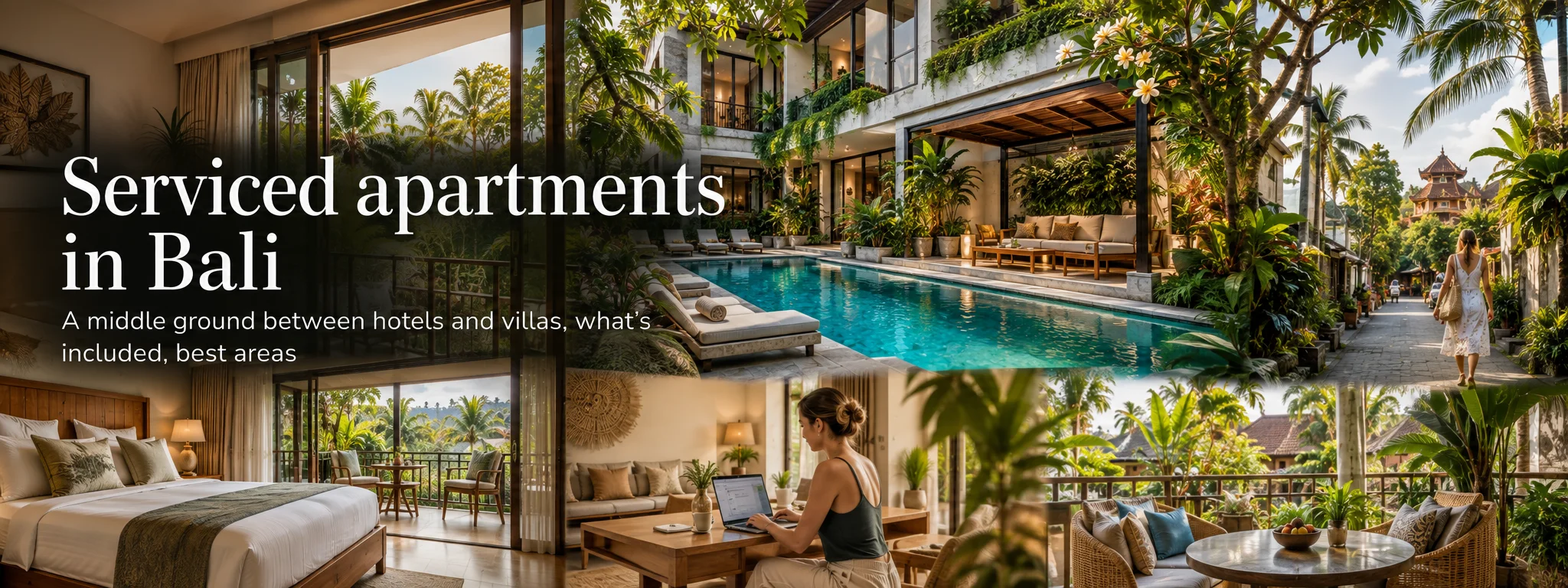
01 What counts as a serviced apartment in Bali?
“Serviced apartment” is used loosely in Bali. At one end, it means a hotel-style building with reception, housekeeping, a proper kitchen and shared facilities. At the other, it can mean a furnished studio that gets cleaned once a week. The label tells you less than the inclusions.
Before comparing prices, confirm exactly what is private, what is shared, how often the room is serviced, whether linen is included and who handles maintenance when something breaks.
Look for hotel-style accountability even if the property is small: a named manager, a clear contact channel, documented check-in and someone responsible for repairs. A beautifully styled studio with nobody available when the water stops is simply a rental, not much of a serviced stay.
02 Who benefits from this format?
Serviced apartments make the most sense for stays long enough that a normal hotel room becomes irritating but short enough that a conventional lease is inconvenient. Remote workers, couples, small families and people relocating temporarily often value the extra living space, fridge, desk and laundry access.
They are less compelling if you want full resort service, a private garden and pool, or a very cheap room where you will only sleep.
Families may value a separate sleeping area and simple food preparation; solo workers may care more about security and a real desk. Couples often discover that two chairs, two bedside outlets and enough wardrobe space matter more over a month than a decorative bathtub photographed for the listing.
03 Choose for daily life, not sightseeing headlines
A month in Bali is not a four-day holiday repeated seven times. Grocery access, traffic, gym distance, coworking, beach access and how easily you can get dinner matter more than being close to a famous attraction.
Canggu and Seminyak have large long-stay markets but also congestion and construction. Sanur often suits people who value a flatter, calmer daily routine. Ubud works well if culture, wellness and central Bali matter more than the beach. Visit the street at the times you will actually live there.
Do one test journey before signing a long stay if commute time matters. A six-kilometre trip can be easy at 10am and miserable at 5pm. If you plan to walk, inspect footpaths and road crossings yourself — “five minutes to cafes” does not guarantee a pleasant pedestrian route.
04 Compare the whole monthly cost
Nightly rates can be misleading. Ask whether electricity, water, drinking water, cleaning, linen, internet and taxes are included. Air-conditioning use can materially change an electricity bill, particularly in larger units.
Also check minimum stay, deposit, cancellation terms and whether the rate changes after the first month. Avoid paying a large non-refundable amount before you have verified the property and payment recipient.
Housekeeping frequency matters too. Daily cleaning may be unnecessary for a long stay, while once-weekly service can feel too sparse in a humid climate. Ask whether extra cleaning is available and what it costs before you need it.
05 Inspect the kitchen and laundry like you plan to use them
A “kitchenette” may mean a sink, kettle and one induction ring. If you plan to cook, check fridge size, ventilation, cookware, knives, storage and whether there is enough bench space to prepare food. Ask how bottled or filtered drinking water is handled.
For laundry, confirm whether you have a washer, shared machines or an external service. Bali laundries are inexpensive, but repeatedly hauling clothes through traffic becomes old quickly.
Check ventilation if you genuinely cook. A one-room studio can smell like last night’s sambal for a day if the extractor is decorative. Also ask whether gas, induction or electric cooking is used and whether replacement drinking water is delivered or self-service.
06 Wi-Fi matters more than the listing speed test
If you work online, test the connection from the actual desk and bedroom, not only beside the router. Ask whether the building has one shared connection or separate access points, and what happens during an outage.
A local mobile data connection is a useful backup, but do not choose a building with poor fixed internet on the assumption your phone will rescue every video call. Also check desk height, chair comfort, power outlets and noise during working hours.
If the listing advertises a speed, ask when and where it was tested. More important than one fast result is stability during the hours you work. A building full of remote workers can perform differently at 8pm from an empty lobby at inspection time.
07 Deposits, payment and documentation
Get the agreed rate, inclusions, deposit conditions, dates and refund terms in writing. Photograph existing damage on arrival and keep payment receipts. If utilities are metered separately, record the meter reading with the manager at check-in.
Accommodation paperwork does not change immigration or employment rules. A long stay in an apartment does not automatically give you permission to work in Indonesia or extend a visa.
For a monthly booking, clarify what happens if you leave early or the unit becomes uninhabitable. The answer is far easier to negotiate before payment than after a plumbing failure. Keep important agreements in the booking platform or written messages rather than relying on a verbal promise.
08 Building safety, access and noise
Check door and window locks, stair lighting, pool access, balcony rails and how guests enter after reception hours. If travelling with children, treat an unfenced pool or easy balcony access as a major decision factor rather than a small inconvenience.
Construction noise is one of Bali’s classic long-stay surprises. Visit during the day, look at neighbouring lots and ask directly about planned works. A peaceful inspection at 7pm tells you nothing about 8am drilling.
Motorbike parking, helmet storage and late-night access can also matter. A building on a narrow lane may be peaceful but awkward for cars, delivery riders or emergency access. Look at the entire arrival sequence, not just the room.
09 Inspect before settling in if the stay is important
For a longer booking, one or two flexible nights before committing can be money well spent. Test air-conditioning, water pressure, hot water, Wi-Fi, kitchen gear and road noise. Open cupboards and smell for damp. Check how quickly management responds to a small request.
Photos sell space; management quality determines whether you enjoy living there.
Water is another long-stay issue. Ask about drinking-water supply, shower pressure and whether the property uses a tank or pump. A five-minute inspection should include running the shower and taps, not just opening the fridge.
10 Serviced apartment vs hotel, villa or lease
Choose a hotel for maximum service and minimal admin. Choose a villa for privacy and space, accepting more maintenance complexity. Choose a guesthouse for value and community. Choose a serviced apartment when you want independent living with someone else still responsible for the building.
The best long-stay option is not the one with the biggest floor plan. It is the one that removes daily friction.