

After watching Bali change since my first visit in 1989, I am deeply suspicious of the phrase “hidden gem”. If a place is on a viral reel with coordinates, a drone shot and twelve “nobody knows this spot” captions, it is not hidden. The better trick is travelling more slowly, choosing a quieter base and visiting good places at better times.
I am not going to publish a treasure map into somebody’s rice field or private compound just so we can call it secret. This guide focuses on regions and approaches that spread the trip out, support local businesses and give you a bit more breathing room without pretending Bali still has untouched corners waiting for us to discover.
My favourite Bali “hidden gem” is often not a new pin at all. It is a good place visited slowly, respectfully and at a time when everybody else is chasing something else.
For a short trip, I would choose one quieter base — Sidemen, Munduk, Pemuteran, Amed or another region that matches your interests — and stay two or three nights. On a longer trip, connect two into a logical loop. Mornings and evenings in the area are worth far more than collecting destinations through a car window.
11 Build a hidden-gem trip around a base, not a scavenger hunt
Dress appropriately at temples and religious sites, step around offerings, keep noise down near homes and ask before photographing people. If a place feels busy, do not push deeper into private land looking for the ‘secret’ version. Move on or return at another time.
Use marked roads and public paths. Do not trespass through rice fields for a photograph, fly drones over ceremonies or homes without permission, or treat local irrigation channels as private swimming pools. Pay legitimate local entrance and parking charges and support small businesses when you use community facilities.
10 How to explore quieter places without ruining them
Sanur’s long beachfront, parts of Jimbaran away from peak dinner time and less-hyped neighbourhood lanes can all feel surprisingly calm. The lesson is useful across Bali: time of day can matter as much as the destination name.
You do not always need a three-hour transfer to find breathing room. In the south, the trick is often timing: an early beach walk, a neighbourhood market before the heat, a temple outside peak coach hours, or staying one street back from the main nightlife strip.
For waterfalls and rural viewpoints, use established entrances rather than following unofficial shortcuts through farms or private compounds. When local guides are required or clearly useful, treat that as part of visiting a working community rather than as an obstacle to a cheaper photo.
09 Quieter moments in busy South Bali
Check current volcanic and weather information before mountain activities. In the highlands, cloud and rain can alter visibility and road conditions quickly, so keep a flexible alternative rather than forcing a viewpoint in poor weather.
Kintamani is famous for Mount Batur sunrise tours, but Bangli Regency has more to offer than a pre-dawn summit. Villages, lake views, volcanic landscapes and routes through the central highlands can make a rewarding day even if you never climb a volcano.
08 Bangli and the highlands beyond the sunrise checklist
If wildlife experiences are involved, choose operators that keep a respectful distance and do not chase, feed or crowd animals. A quieter place is not automatically a responsible experience; operator behaviour still matters.
North Bali is often reduced to Lovina dolphins, but the region is broader than that one early-morning activity. Around Singaraja and the northern slopes you can combine old urban heritage, waterfalls, hill country and a coast that feels very different from Seminyak or Uluwatu.
07 North Bali: waterfalls, old towns and a different coast
Amed and Tulamben are excellent if marine life is the priority; Sidemen if you want inland landscapes; Candidasa if you want a south-east coastal base; and the Amlapura/Tirta Gangga area if cultural sites and gardens matter more.
Karangasem offers many ways to get away from the fastest tourist circuit: the Amed coast, inland villages, rice valleys, water-palace country and roads below Mount Agung. The best trips choose a base and explore a compact area instead of trying to combine Amed, Sidemen, Besakih and every major temple in one day.
06 East Bali beyond the headline temple circuit
Arrive earlier, slow down, read the interpretation available and remember that this is a community, not a film set. Do not enter private areas without invitation and ask before photographing people at close range.
Penglipuran is widely promoted and can be busy, so it is not hidden in the literal sense. What makes it worthwhile is the chance to see a carefully maintained traditional village layout and learn about local spatial organisation rather than simply walking the main lane for a photograph.
05 Penglipuran: popular, but worth seeing thoughtfully
Combine it with West Bali rather than with a packed Ubud itinerary. The journey can become part of a north-and-west loop, with stops chosen because they fit the route rather than because a list says you must see them.
Pemuteran sits on Bali’s north-west coast and makes sense for travellers interested in snorkelling, diving, Menjangan trips and a quieter beach base. It is a long way from the airport and from the south, which is precisely why it works better as an overnight destination than as a heroic day trip.
04 Pemuteran: west-Bali coast without the south-Bali tempo
I would rather walk one or two waterfalls properly than collect six entrance tickets. In places such as Munduk, the landscape between the named stops is half the appeal, and rushing it defeats the reason you came north in the first place.
Munduk combines cooler air, plantation country, lake views and access to several waterfall walks. It is a strong option for travellers who like walking and do not mind hills, rain or slower roads. The highlands can be much cooler and wetter than the coast, so carry a light layer and expect weather to change.
The area is also a useful reminder that ‘beach’ in Bali does not always mean a wide strip of pale sand and beach clubs. The pace is quieter, distances are longer and many visitors come primarily for what is offshore rather than for a resort-style shoreline.
03 Munduk and the north-central highlands
Sidemen makes much more sense to me as a one- or two-night base than a drive-through photo stop. Morning and late afternoon are the rewarding parts of the valley, and staying over lets you experience them without bookending the visit with two long transfers.
Sidemen is no longer a secret, but it still feels very different from the busiest southern resort areas. The draw is the landscape and pace: rice fields, village roads, views towards Mount Agung, weaving, small guesthouses and walks that make more sense with a local guide than with a list of coordinates.
If you are driving from the south, do not combine Munduk with a late southern dinner booking. The return crosses highland roads and can be tiring after dark. A highland night is often the difference between seeing the region and merely driving through it.
02 Sidemen: rice valleys and a slower base
This is why I dislike the secret-pin mentality. Chasing a supposedly hidden waterfall from a viral reel can create the exact crowd you were trying to escape. A quieter base, an early start, local spending and a bit of respect for the fact that villages are lived-in communities usually produce the better story.
There are very few truly unknown places left on an island visited by millions of people. A better definition of a Bali hidden gem is somewhere that sits outside the standard south-Bali/Ubud day-trip conveyor belt, or a familiar region approached more slowly and at a different time of day.
01 What “hidden gem” should mean in Bali
Cheers, Carpe Diem & Find Better Places, Not Secret Pins! 🍻⏳🗺️
your secret-pin sceptic and slow-travel correspondent
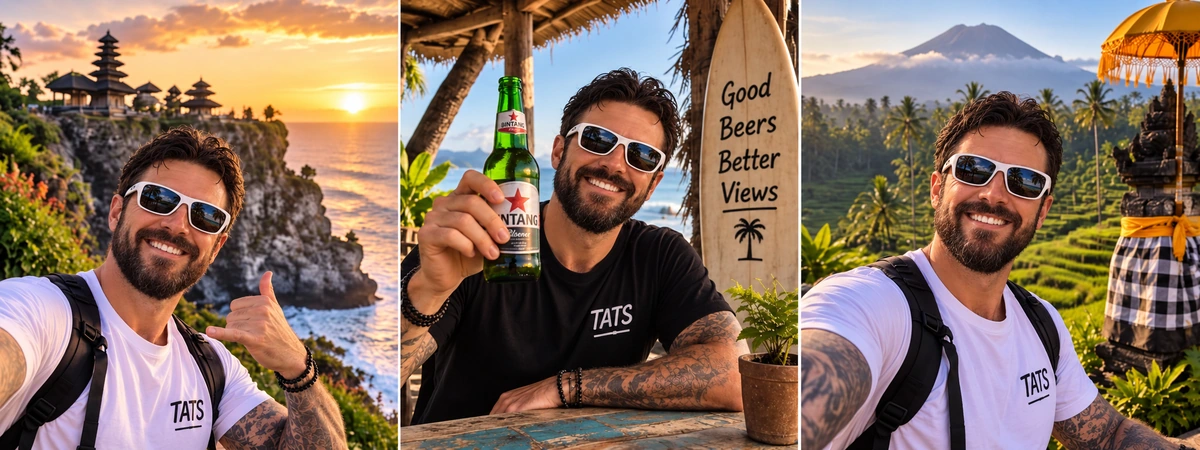
About the author
TATS Man
Travel journalist · digital nomad since 2007 · visiting Bali since 1989
TATS Man is the beer-loving cyborg travel journalist behind Totally Bali and TATS (Totally Awesome Travel Sites). He has travelled and worked remotely since 2007 and has been visiting Bali since 1989. His guides combine long-term destination familiarity with current primary-source research — and he does not claim first-hand experience where he does not have it.