
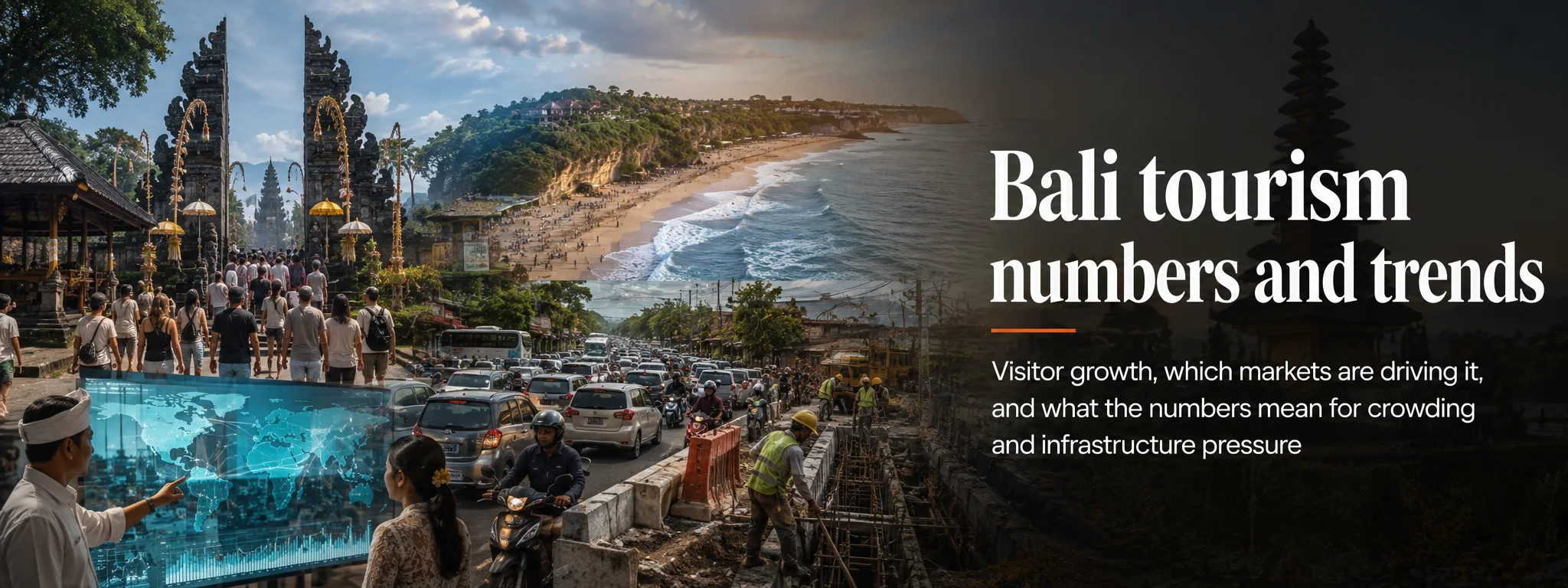
01 The scale of Bali's tourism growth
Bali's international visitor numbers have grown substantially over the past two decades, establishing the island as one of the most visited single destinations in Southeast Asia relative to its size. This sustained growth — punctuated by occasional sharp dips from external shocks like the pandemic — underlies much of the infrastructure pressure, pricing changes and policy responses covered elsewhere on this site, including our infrastructure projects guide and tourist levy guide.
02 Shifting source markets
While Australia has long been Bali's largest and most consistent international source market (see our getting to Bali guide), China and India have both grown substantially as source markets in recent years, reflecting broader trends in outbound tourism from both countries. This diversification has changed the visitor mix at many sites and hotels, with increasing multilingual signage and services catering to these growing markets alongside the established Australian, European and broader Asian visitor base.
03 Crowding pressure at major sites
The practical effect of sustained growth is most visible at Bali's most famous single attractions — Tanah Lot, Tegalalang, Uluwatu, the Sacred Monkey Forest — where peak-season crowding has become a genuine and consistently noted issue across our individual site guides. This is a significant reason we consistently recommend early-morning visits and highlight less-crowded alternatives throughout the site, from hidden gems to quieter versions of popular experiences.
04 Policy responses
The Bali provincial government has responded to growth pressure through several mechanisms — the tourist levy introduced in 2024, the formal tourist code of conduct, and ongoing (if slow-moving) infrastructure investment. Periodic discussion of a formal visitor cap or more restrictive quota system has occurred but has not, as of 2026, been implemented — the current policy direction favours managing growth through levies, behaviour codes and infrastructure investment rather than hard visitor limits.
05 What this means for planning your trip
Understanding this broader context helps set realistic expectations — Bali's most famous sites will very likely be crowded during peak periods, and this is a structural feature of current tourism volume rather than a temporary or easily solved issue. Planning around it (early mornings, shoulder-season travel, seeking out less-visited alternatives) genuinely improves the experience more than hoping the crowds will thin on their own.