
01 What the subak system is
Subak is Bali's traditional cooperative irrigation system for wet-rice cultivation — a democratically governed network of farmer associations that manage shared water resources across the island's terraced rice landscapes, documented in some form since at least the 9th century and still functionally active today. In 2012, UNESCO inscribed the subak system as part of the Cultural Landscape of Bali World Heritage listing, recognising it as an exceptional example of a philosophy translated into a functioning agricultural and social system.
02 How it actually works
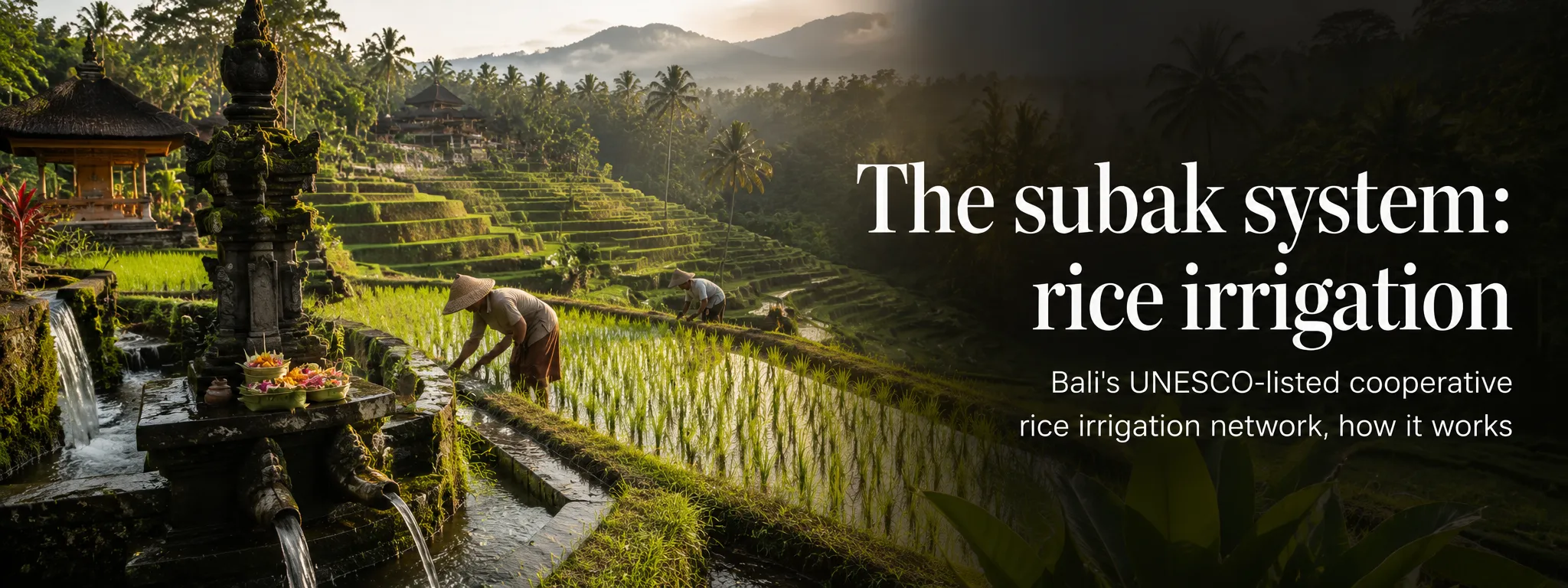
Each subak is a farmer cooperative managing water distribution across a defined group of rice terraces sharing a common water source — typically a river or spring — with democratically elected leadership deciding on water allocation, planting schedules and dispute resolution. This isn't simply a technical irrigation network but a genuine governance institution, historically operating with a degree of autonomy from broader village and royal administration specifically for water management matters.
03 The temple connection
Each subak is linked to water temples that coordinate the ceremonial dimension of irrigation — timing plantings and harvests according to both practical water availability and the Balinese ceremonial calendar (see our Balinese calendar guide), reflecting the principle of Tri Hita Karana: harmony between people, nature and the divine, applied directly to agricultural practice rather than treated as separate spiritual and practical spheres.
04 Where to see the subak system today
The Jatiluwih rice terraces (see our West Bali guide) are the most prominent site specifically recognised within the UNESCO listing, offering a genuine working example of the system at scale. Tegalalang near Ubud, while more commercially developed for tourism, operates on the same underlying subak principles. Understanding this system adds meaningful depth to visiting any of Bali's rice terrace landscapes — they're not simply scenic backdrops but functioning components of a genuinely ancient and sophisticated agricultural and religious institution.