
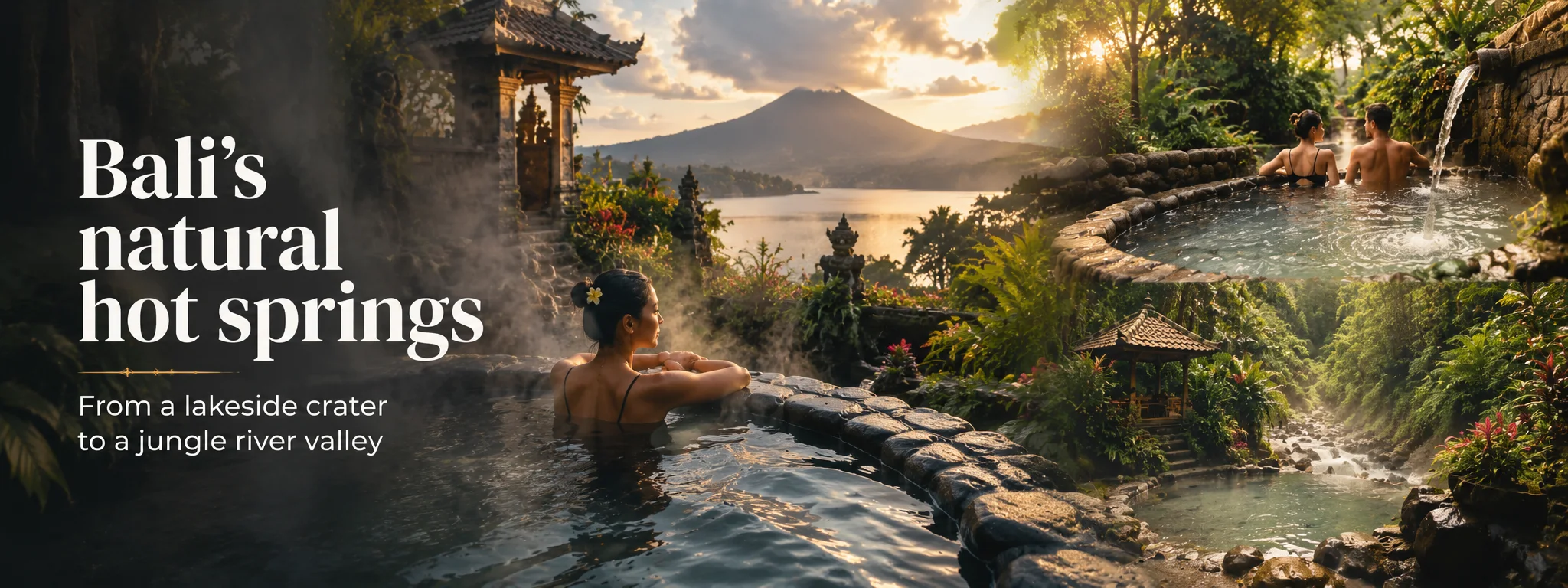
A hot-spring stop can be excellent after a cool highland morning, a long drive or a Mount Batur start — but only if it fits the geography. Bali’s best-known options deliver different experiences, and “healing volcanic water” marketing should not replace ordinary health judgement.
01 Banjar vs Batur: two very different hot-spring days
Travellers usually mean one of two places when they talk about Bali hot springs: Banjar Hot Spring in north Bali, near Lovina, or the geothermal pools around Lake Batur at Toya Bungkah/Kintamani. Banjar is a historic-feeling tropical bathing complex built around warm mineral water and stone naga fountains. Batur is a volcanic-lakeside soak with Mount Batur and Lake Batur scenery. Choosing by geography is usually smarter than crossing the island just to compare them.
02 Banjar Hot Spring: the North Bali classic
Banjar Hot Spring sits inland from the Lovina coast in Buleleng. The official site currently lists everyday opening from 8:30am to 5:30pm and describes multiple pools, tropical gardens, showers, parking, rest areas and simple food facilities. The main pool is fed by warm mineral water delivered through distinctive carved fountains.
Banjar works best as part of a north Bali day rather than a dedicated expedition from Seminyak. Combine it with Lovina, Brahmavihara-Arama or another Buleleng stop and the journey makes sense.
This is a public bathing attraction, not a private luxury spa. Expect other visitors, changing areas, wet paths and a relaxed communal atmosphere. The tropical setting and stone architecture are a big part of the appeal, but the experience is more “local bathing complex in a beautiful garden” than “silent wellness retreat”.
Go earlier if you want a calmer visit. Bring swimwear you do not mind using in mineral water and shower afterwards if the sulphur smell bothers you.
03 Batur hot springs: scenery is part of the experience
Batur Natural Hot Spring sits beside Lake Batur at Toya Bungkah. Its current official site lists daily hours of 7am–7pm, except Nyepi, and includes towel, soap/shampoo and locker in the listed package. The setting is the key difference: pools look across the caldera lake with Mount Batur dominating the landscape.
It is an obvious pairing with a Mount Batur sunrise hike, Kintamani viewpoint or caldera day. After a pre-dawn climb, soaking warm muscles while looking across the lake has much more logic than driving hours to a hot spring as an isolated attraction.
Toya Bungkah has multiple geothermal bathing businesses. Facilities, prices and views vary, so do not assume every “Batur hot spring” listing refers to the same property. Check the exact venue name and map pin when booking a driver or package.
If a Mount Batur tour includes “hot springs”, ask which venue, how long you have there and what the package includes. A rushed 30-minute stop is a different experience from choosing to spend a relaxed couple of hours.
The classic sequence is Mount Batur sunrise, breakfast, then the hot springs. It works because you are already in the caldera and your legs appreciate the soak. The downside is crowd concentration: many organised tours arrive in a similar time window. Travellers who are not hiking can visit later when the early-tour wave has thinned, while still leaving enough daylight for the Kintamani roads.
04 Water temperature, minerals and “healing” claims
Warm mineral water can feel relaxing, but claims that a soak treats medical conditions are not a reason to ignore normal health advice. If you are pregnant, have cardiovascular problems, have broken skin or are unsure whether prolonged heat is appropriate for you, get medical advice rather than relying on tourism copy. Hydrate, leave the pool if you feel light-headed and do not assume hotter is better.
The attraction is comfort rather than testing how much heat you can tolerate. Move between pools, cool down when necessary and drink water. Tropical air temperature means overheating can happen even when the water itself feels gentle.
People with cardiovascular conditions, pregnancy concerns or other medical issues affected by heat should ask their doctor for individual advice rather than assuming “natural” means medically suitable.
Hot springs worldwide are marketed with claims about skin, joints, circulation and general healing. Warm water can certainly feel good and help muscles relax, but this guide does not present a soak as medical treatment. If you have a skin infection, open wound or health condition, use normal hygiene and medical judgement.
The best reason to visit is that soaking is enjoyable and the settings are distinctive — not because a tourism brochure promises a cure.
Mineral water can have a noticeable sulphur smell and may affect delicate swimwear or jewellery. Use simple swimwear, remove valuable metal jewellery, and rinse after bathing. People with highly sensitive skin should start with a shorter soak and stop if irritation develops. Again, a natural spring is not automatically suitable for every body.
05 What to bring, hygiene and pool etiquette
- Swimwear and a dry change of clothes.
- Sandals/flip-flops with decent grip.
- A waterproof bag for wet clothing.
- Drinking water.
- Sunscreen for outdoor pools.
- A small towel if your chosen venue does not include one.
Leave expensive jewellery at the hotel. Mineral water, wet surfaces and changing areas are not where you need to manage unnecessary valuables.
Shower/rinse as the venue requests, keep food out of pools, and do not treat public bathing areas as a private photo studio. Banjar in particular is used by a broad mix of local and international visitors. Respect other people’s space and avoid blocking fountains or pool edges for extended photo sessions.
06 Children, comfort and who should skip a soak
Families can enjoy both Banjar and Batur, but supervision matters around slippery pool edges and varying depths. Young children may tire of soaking long before adults do, so pair the visit with another activity rather than building an entire day around mineral pools.
If you dislike communal pools, have very limited time in Bali, or are staying in the far south with no other reason to visit north Bali/Kintamani, a hot-spring excursion may not justify the driving. Bali already has excellent spas closer to the main resort areas. The springs become special when they fit naturally into the landscape you are exploring.
07 Best time, rain and crowd strategy
Morning is generally cooler and quieter. At Batur, early timing fits naturally after a sunrise hike. At Banjar, arriving before tour groups gives the tropical garden more atmosphere. Late afternoon can also be pleasant, but do not cut closing time close after a long cross-island drive.
Yes, within reason. Warm water in cool mountain rain can be atmospheric, but thunderstorms, heavy rain and slippery paths reduce the appeal. Batur sits at higher elevation than the southern resorts, so the weather can be cooler and change faster. Banjar is lower and more tropical. Bring a dry layer for the drive home, particularly after an early Batur visit.
08 Transport and route pairings that make sense
Both major hot-spring areas are far from the southern beach-resort core. From Seminyak or Canggu, Banjar is a north-Bali excursion; Batur is a Kintamani excursion. Use a driver if you are not comfortable with mountain roads. The journey becomes worthwhile when the hot spring is part of a coherent regional day.
See our getting around Bali guide and north Bali guide before committing to the drive.
From Lovina, Banjar is an easy add-on that does not dominate the day. From Ubud or south Bali, Batur usually makes more sense because it combines with Kintamani scenery and the volcano. If you are already travelling between north Bali and the south, Banjar can fit naturally into the journey. Build the route around geography, not an attraction checklist.
09 Tickets, private pools and how long to allow
Banjar’s official site currently lists a separate international visitor price for the main pool and additional private/VIP pool options. Because prices are easy to change, we do not freeze them into the main planning advice. Check the current official booking page shortly before your visit. Basic entry is inexpensive compared with resort spa pricing, which is part of Banjar’s appeal.
Facilities are practical rather than luxurious: parking, rinse areas, a small shop/warung and rest areas. If you want robes, elaborate spa treatment and hotel-level service, choose a resort spa instead of expecting a public hot spring to behave like one.
Some hot-spring venues offer private pools, massage or body treatments. These can make sense for couples or travellers who dislike crowded communal pools, but compare the experience with a normal Bali spa. If your main goal is massage, you may get better value from a dedicated spa; if your main goal is geothermal water and scenery, prioritise pool access.
For most travellers, 60–120 minutes of soaking is enough. Add changing, showering, photos and a drink, and the stop becomes roughly two hours. Longer can be lovely if you have a private pool or spa treatment, but you do not need to sacrifice half a sightseeing day simply to maximise admission value.
10 Photography, expectations and the Totally Bali verdict
Both Banjar and Batur are photogenic, but they are first and foremost bathing spaces. Avoid photographing strangers closely in swimwear, monopolising fountain positions, or using drones without permission. At Banjar, the carved naga fountains are the obvious photo point; take the picture, then let other bathers use them.
Do not drive across Bali merely to tick off “a hot spring”. Visit the one that fits your route. Banjar adds character to a Lovina/north Bali itinerary; Batur is a superb recovery stop after the volcano or a Kintamani morning. In both cases, the setting and pacing matter more than any exaggerated wellness claim.