
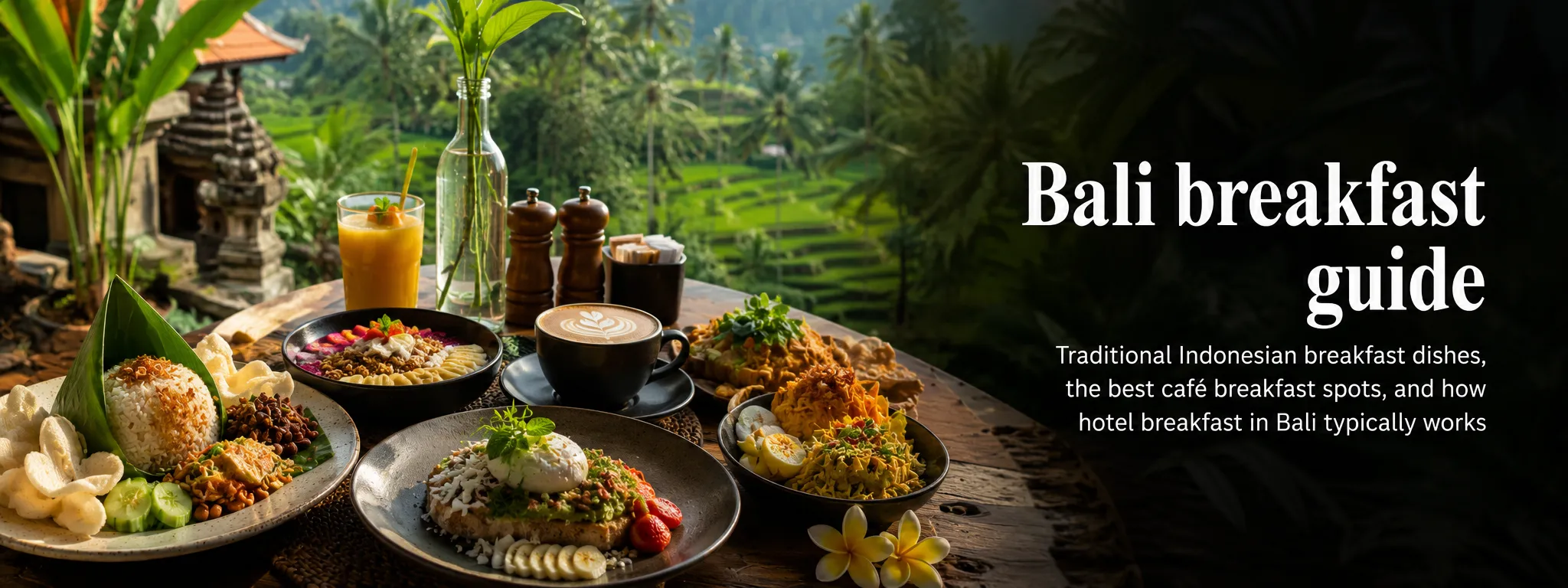
01 Traditional Indonesian breakfast
Traditional Balinese and Indonesian breakfast is savoury rather than sweet, and eaten early — often before 7am for those with work to start. Bubur ayam (chicken rice porridge, topped with shredded chicken, crispy shallots, celery and a savoury soy sauce) is one of the most common street breakfasts, found at roadside carts from early morning. Nasi goreng (fried rice, often with a fried egg on top) works equally well as breakfast or any other meal. Pisang goreng (fried banana fritters) and other fried snacks are common quick breakfast options bought from street vendors. A warung breakfast costs IDR 15,000–25,000 — genuinely one of the best-value meals of the day.
02 The café breakfast scene
Canggu and Ubud have developed an extensive international-style café breakfast culture over the past decade — smoothie bowls (açai, dragon fruit, pitaya bases with granola and fresh tropical fruit), avocado toast, eggs benedict and specialty coffee are all readily available and genuinely well-executed. This costs considerably more than traditional breakfast — IDR 60,000–120,000 for a smoothie bowl or full café breakfast — but represents some of the better-quality Western-style breakfast available anywhere in Southeast Asia. Betelnut Café, Peloton Supershop and Shady Shack in Canggu are consistently recommended; SENIMAN Coffee and Clear Café in Ubud offer similar quality in a highland setting.
03 Hotel and villa breakfast
Breakfast is included in most mid-range and above accommodation in Bali — either a set menu delivered to your villa (common at private pool villa properties, where a housekeeper or cook prepares a simple breakfast to order) or a buffet at larger hotels. Resort buffet breakfasts at properties like the Mulia or Grand Hyatt are genuinely extensive, spanning Western, Indonesian, Japanese and other Asian breakfast styles. Confirm what's included when booking — some budget guesthouses offer only a very basic continental breakfast (toast, tea, fruit) despite listing "breakfast included."
04 Coffee with breakfast
Bali's specialty coffee scene (see our drinks guide) pairs naturally with the café breakfast culture — single-origin Balinese and Flores beans on proper espresso and pour-over menus. Traditional kopi Bali (finely ground coffee steeped directly in hot water, drunk sweet with the grounds settling at the bottom) is the more traditional accompaniment to a warung breakfast and worth trying at least once for the genuinely different experience.
05 Practical notes
If you're staying somewhere without breakfast included, a nearby warung is almost always the cheapest and often the most authentic option — ask your accommodation for a recommendation, as quality varies and locals know which stalls are freshest. For a slower, café-style breakfast experience, arrive before 9am at the popular Canggu spots to avoid the queue that builds through mid-morning, particularly on weekends.
06 There is no single Balinese breakfast
Breakfast in Bali can mean rice from a market stall at dawn, porridge beside a commuter road, coffee and fried snacks at home, or an elaborate café brunch. Many foods are not restricted to a Western idea of breakfast: nasi campur, soup or grilled chicken may be eaten in the morning because they are filling, available and convenient.
Travellers who only search for “breakfast cafés” miss the daily local rhythm. Visit a morning market or warung early, observe what is selling quickly and ask what remains available. Popular dishes can finish well before late risers appear.
07 Nasi campur, nasi jinggo and nasi kuning
Nasi campur combines rice with small portions of vegetables, sambal, egg, chicken, tempeh, tofu or other prepared dishes. Pointing to what you want is normal at display-style warungs. Ask about price and ingredients before ordering, especially when choosing seafood or several premium items.
Nasi jinggo is a compact banana-leaf rice parcel with small accompaniments, useful for a quick morning meal or snack. Nasi kuning is yellow turmeric-and-coconut rice served with savoury sides and appears at stalls, celebrations and special occasions. Portions and accompaniments differ from seller to seller.
08 Bubur and warm bowls
Bubur ayam is rice porridge topped with variations of shredded chicken, crisp elements, herbs, soy, broth or sambal. It is comforting, inexpensive and common across Indonesia. In Bali, local seasoning and accompaniments vary.
Sweet black-rice porridge, commonly called bubur injin, combines black glutinous rice with coconut milk and palm-sugar sweetness. It may be presented as breakfast or dessert. Ask whether coconut milk has been freshly handled and consume prepared dishes from stalls with good turnover.
09 Jaje Bali and market sweets
Jaje is a broad term for traditional cakes and snacks, many based on rice flour, sticky rice, coconut, banana and palm sugar. Market trays may include klepon-like filled balls, layered cakes, steamed parcels and fried bananas. Names and recipes differ by village and vendor.
Buy a small selection rather than expecting every item to resemble a Western pastry. Textures can be chewy, dense, steamed or sticky. These foods are connected to home cooking and ceremonial traditions as well as daily snacking.
10 Other savoury starts
Morning stalls may sell lontong or ketupat rice cakes with vegetables and sauce, noodles, soto, bakso or small portions of lawar and roast meats. Tipat cantok combines rice cake and vegetables with peanut dressing; it is substantial enough for breakfast or lunch.
Lawar can contain meat, coconut, vegetables and spices, with some versions traditionally including fresh blood. Travellers who avoid particular ingredients should ask rather than guessing from appearance.
11 Coffee, tea and juice
Traditional kopi Bali is often finely ground coffee brewed directly in the cup, leaving sediment at the bottom. Let it settle rather than drinking the final mouthful. Sugar may be added unless you request tanpa gula.
Modern Bali also has an extensive espresso and speciality-coffee scene. Local beans may come from Kintamani and other Indonesian regions. Fresh juice is widely available; ask whether sugar or syrup is added and whether safe water and ice are used.
12 Bali’s modern brunch culture
Canggu, Seminyak, Uluwatu, Sanur and Ubud offer sourdough, smoothie bowls, eggs, pastries, vegan dishes and Australian-style coffee. Quality can be excellent, but fashionable presentation does not guarantee good value or local relevance.
Check whether service and tax are included, especially at hotels and polished cafés. At popular venues, booking or arriving early can avoid queues. Do not block working tables for hours after one drink where the business is busy.
13 Vegetarian, vegan, halal and allergies
Tofu, tempeh, vegetables, fruit and rice make plant-based breakfasts easy to find, but shrimp paste, fish sauce, stock, egg and shared frying oil can appear unexpectedly. Explain requirements specifically. “Vegetarian” may not communicate a severe allergy or strict vegan standard.
Bali is Hindu-majority, so pork is common in some local dishes. Muslim-run warungs and clearly halal establishments are also widespread. Look for reliable halal identification where it matters rather than assuming every chicken or beef dish meets the requirement.
14 Useful ordering language
- Saya mau ini — I would like this.
- Berapa harganya? — How much is it?
- Tidak pedas — Not spicy.
- Sedikit pedas — A little spicy.
- Tanpa gula — Without sugar.
- Tanpa daging — Without meat.
- Bungkus — Pack it to take away.
A calm greeting, pointing politely and saying terima kasih are more useful than attempting a complicated performance.
15 Food-safety judgement
Choose stalls with steady turnover, food protected from contamination and dishes served properly hot. Avoid lukewarm cooked food that has sat for hours. Wash hands before eating and use safe drinking water.
Morning markets can be hot and crowded. Keep valuables secure, carry small notes and step aside before photographing. Ask permission before photographing a vendor closely.
16 Where and when to look
Traditional breakfast is easiest to find early near markets, schools, offices and residential roads. Hotel buffets and brunch cafés run later. If a highly rated stall is closed at 10am, that may mean it successfully served its morning customers rather than failed to keep tourist hours.
Mix the formats: one market breakfast, one family warung and one modern brunch will reveal more about Bali’s food culture than four versions of the same smoothie bowl.