
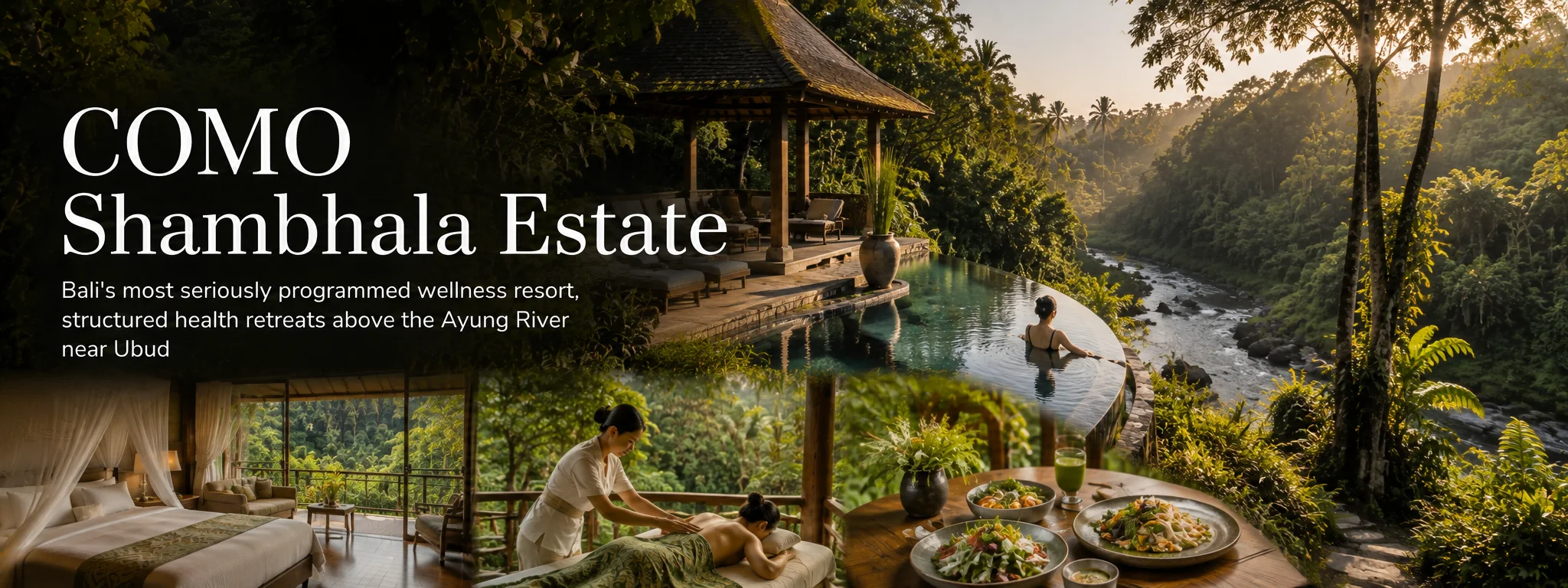
01 A wellness retreat, not simply a luxury hotel with a spa
COMO Shambhala Estate is built around wellness as the organising idea of the stay. The 22-acre property sits in forest near the Ayung River outside Ubud, with residences, villas and suites scattered through the landscape rather than a single hotel block. There are conventional pleasures — pools, restaurants, beautiful rooms — but the resort makes most sense for travellers who plan to use the wellness facilities and daily programme. The old page went too far by implying the estate treats illness, burnout or other health conditions. A luxury wellness retreat is not medical care. Come for structured exercise, relaxation, treatments, food and time in nature; speak to qualified healthcare professionals about actual medical conditions.
02 Residences, suites and pool villas
Accommodation is unusually varied. Some suites sit within shared residences that have communal pools, lounges and dining spaces, while standalone pool villas offer more separation. Larger residences work for groups who want a private-home rhythm with resort service. That structure means category choice changes the social experience as much as room size. A terrace suite in a residence may feel more connected to shared spaces; a pool villa is better for guests who want privacy. The architecture uses local stone, timber and alang-alang roofing without turning the property into a theme park version of Bali. Before booking, ask whether your category involves significant stairs or steep paths, because the forest setting is beautiful partly because it is not flat.
03 What the wellness facilities actually include
The estate’s current facilities include nine treatment rooms, three treatment pavilions, sauna and steam facilities, consultation rooms and a range of guided wellness equipment and therapies. That is far beyond the usual hotel-spa menu, but more is not automatically better. Start with your real goal: rest, movement, stress reduction, nutrition, or simply trying new activities. Then choose a programme and treatments that support it. Avoid the trap of booking every add-on because it sounds advanced. Some offerings are wellness experiences rather than treatments supported for medical conditions. If you have health concerns, pregnancy, recent surgery or medication issues, disclose them and obtain appropriate medical advice before using intense heat, fasting, hyperbaric or other specialised services.
04 Pools, the spring and the landscape
A 25-metre swimming pool provides straightforward exercise, while natural springwater pools and riverine areas give the estate a much more immersive landscape than a typical hotel gym-and-spa setup. The Source, a natural spring significant in local culture, is part of the property’s identity. Treat these places respectfully rather than as wellness props. Paths through the estate can involve gradients and damp surfaces, especially after rain, so good footwear matters more here than at a flat beach resort. The setting rewards guests who are willing to walk and slow down. Travellers with mobility limitations should discuss routes to accommodation, dining and treatment areas with the hotel before booking so the forest does not become an avoidable barrier.
05 Food is healthy, but it is still food — not a cure
Dining is split principally between Kudus House, which leans into Indonesian cuisine, and glow, home to COMO Shambhala Kitchen’s wellness-oriented menus. The resort emphasises nutritional integrity, fresh ingredients and food that complements active or restorative programmes. That can be excellent if you want to eat lightly without feeling punished by “diet food”. It should not be described as treating disease or detoxifying the body in a medical sense. Guests who want lavish steakhouse-and-cocktail resort dining may find the philosophy restrictive; guests who enjoy vegetables, Indonesian flavours and thoughtful portions often find it refreshing. Private dining and river settings add occasion without abandoning the overall wellness tone.
06 Daily activities make short stays more useful
The estate runs a changing daily schedule that can include movement, yoga, meditation and other group activities. This is important because you do not need an expensive bespoke programme to make use of the wellness environment. A short stay can work well if you join the schedule, swim, book one or two treatments and spend time in the forest. Longer stays make more sense for guests following a tailored programme or intentionally stepping away from normal routines. Check the current schedule before arrival rather than assuming a specific class runs every day. Some activities are complimentary for guests and others attract charges, so clarify what is included in your package.
07 Near Ubud, but not an Ubud-town hotel
COMO Shambhala Estate is beyond Ubud’s centre in a forested area, which gives it the quiet required for the retreat concept. It also means you should not expect to wander out for cafés, galleries and shopping. Trips into Ubud require transport and traffic can make road times unpredictable. If exploring central Ubud every day is your priority, stay in or closer to town and visit a spa separately. If you want Ubud available for one or two outings while spending most of the trip in nature, the estate’s position works well. Splitting a Bali holiday between this retreat and a beach area can also create a useful contrast rather than asking one hotel to provide both forest wellness and coastal leisure.
08 Health claims and safety boundaries
Wellness marketing can blur the line between feeling better and treating disease, so keep the distinction clear. Massage, exercise, sleep, nutritious meals and quiet time may support wellbeing, but they do not replace diagnosis, medication or evidence-based treatment. The estate has consultation facilities and access to medical support, yet travellers with significant conditions should plan care with their own clinicians. Be especially cautious around fasting, supplements, colonics, intense exercise, heat exposure or specialised equipment if you have medical risk factors. A credible wellness trip should leave you feeling supported, not pressured to ignore normal healthcare. This page deliberately avoids promising “detox”, recovery from illness or cure-like outcomes.
09 Who will get value from COMO Shambhala Estate
The estate suits travellers who actively want a wellness-centred holiday and are comfortable spending much of the day on-property. It is excellent for quiet solo stays, couples who share an interest in wellness, and repeat Bali visitors who have already done the sightseeing circuit. It is less compelling for first-time visitors desperate to see temples and beaches every day, travellers who want nightlife, or people booking purely because the resort appears on luxury lists. Families should ask about the programme and accommodation fit rather than assuming every wellness environment is child-oriented. The resort’s premium makes sense when you use the facilities; it is poor value if you only sleep there and head into Ubud each morning.
10 How to plan the stay
Start by deciding whether you want a normal room-and-breakfast stay or a structured wellness programme. Compare what treatments, consultations, meals and activities are included; packages can differ dramatically in value. Ask about accommodation location if stairs or walking are an issue. For specialised wellness services, disclose relevant health information and check contraindications before arrival. Two or three nights can be a restorative introduction, while a longer stay makes more sense for travellers building a deliberate programme around movement, rest and food. Pairing the estate with a separate beach hotel often creates a more balanced Bali itinerary than trying to add constant sightseeing to a retreat designed around slowing down.