01 How Bali traffic actually works
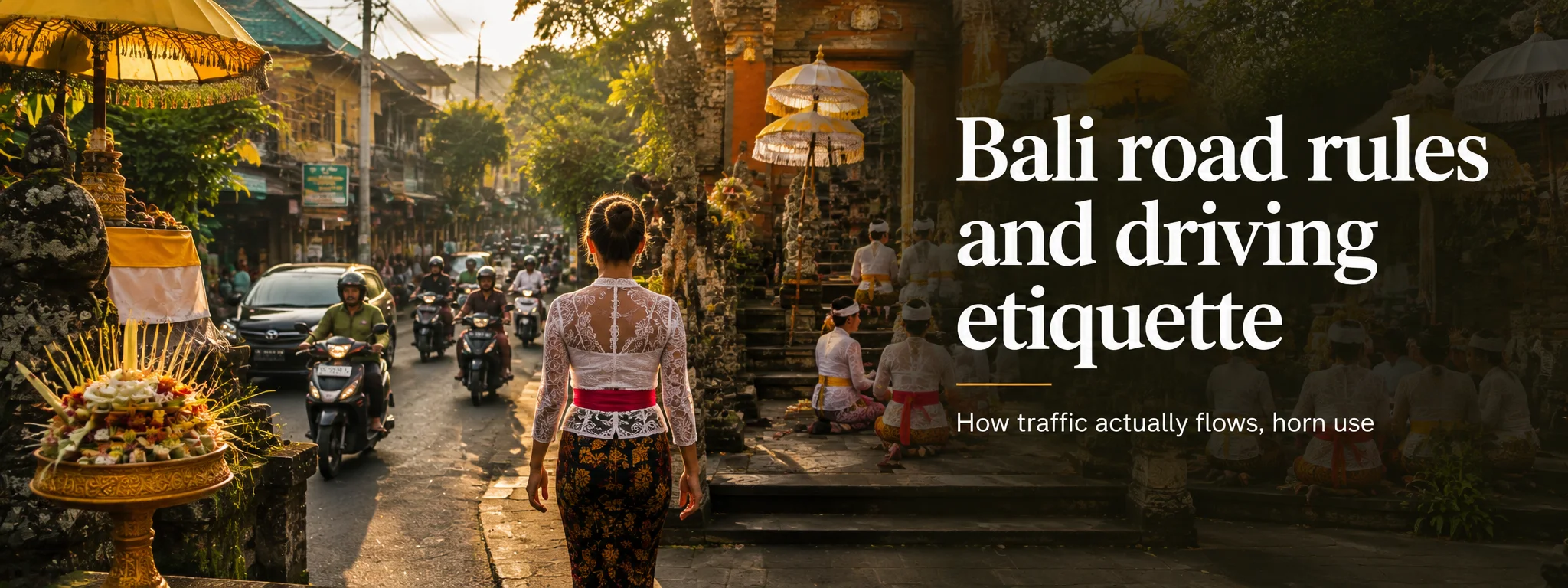
Bali drives on the left, following broadly the same traffic conventions as Australia or the UK, but the practical flow of traffic — particularly involving the huge volume of scooters — operates with more informal negotiation than strict rule-following. Understanding this before self-driving matters more than memorising formal road rules, which exist but are loosely applied outside major arterial roads.
02 Horn use
Horns are used constantly and don't generally signal aggression the way they might in Western driving culture — a light horn tap typically means "I'm here, I'm passing" rather than anger or urgency. Scooter riders in particular horn frequently when overtaking or approaching blind corners, a genuinely useful safety practice once you understand the convention rather than a hostile gesture.
03 Right of way and negotiation
At many intersections, particularly smaller ones without clear signage, right of way is negotiated in the moment through eye contact, gradual movement and mutual awareness rather than strictly by formal rule — this can feel chaotic to visitors used to more rule-based traffic cultures, but generally functions smoothly once you adjust to the local rhythm. Larger, signed intersections and traffic lights are followed more formally.
04 Scooter traffic behaviour
Scooters weave between lanes, overtake on both sides, and occupy gaps that would seem impossibly tight by Western driving standards — this is completely normal in Bali and something to anticipate and account for defensively if you're driving a car, rather than being surprised by it. See our getting around guide for broader context on navigating this as either a driver or scooter rider yourself.
05 Police checkpoints
Police checkpoints checking for proper licensing (International Driving Permit with correct endorsement, see our rental guide) do occur, particularly around major tourist areas. Carry your IDP and passport when driving or riding, and be prepared to show them if stopped.